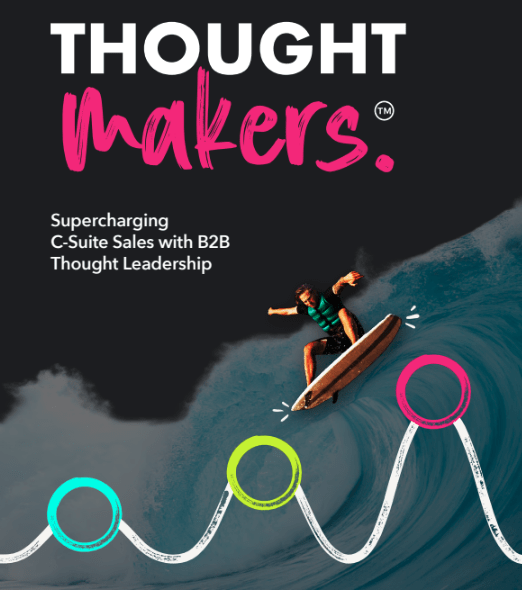
Thought Makers: Supercharging C-Suite Sales with B2B Thought Leadership
Find out how you can use thought leadership to supercharge brand and sales.
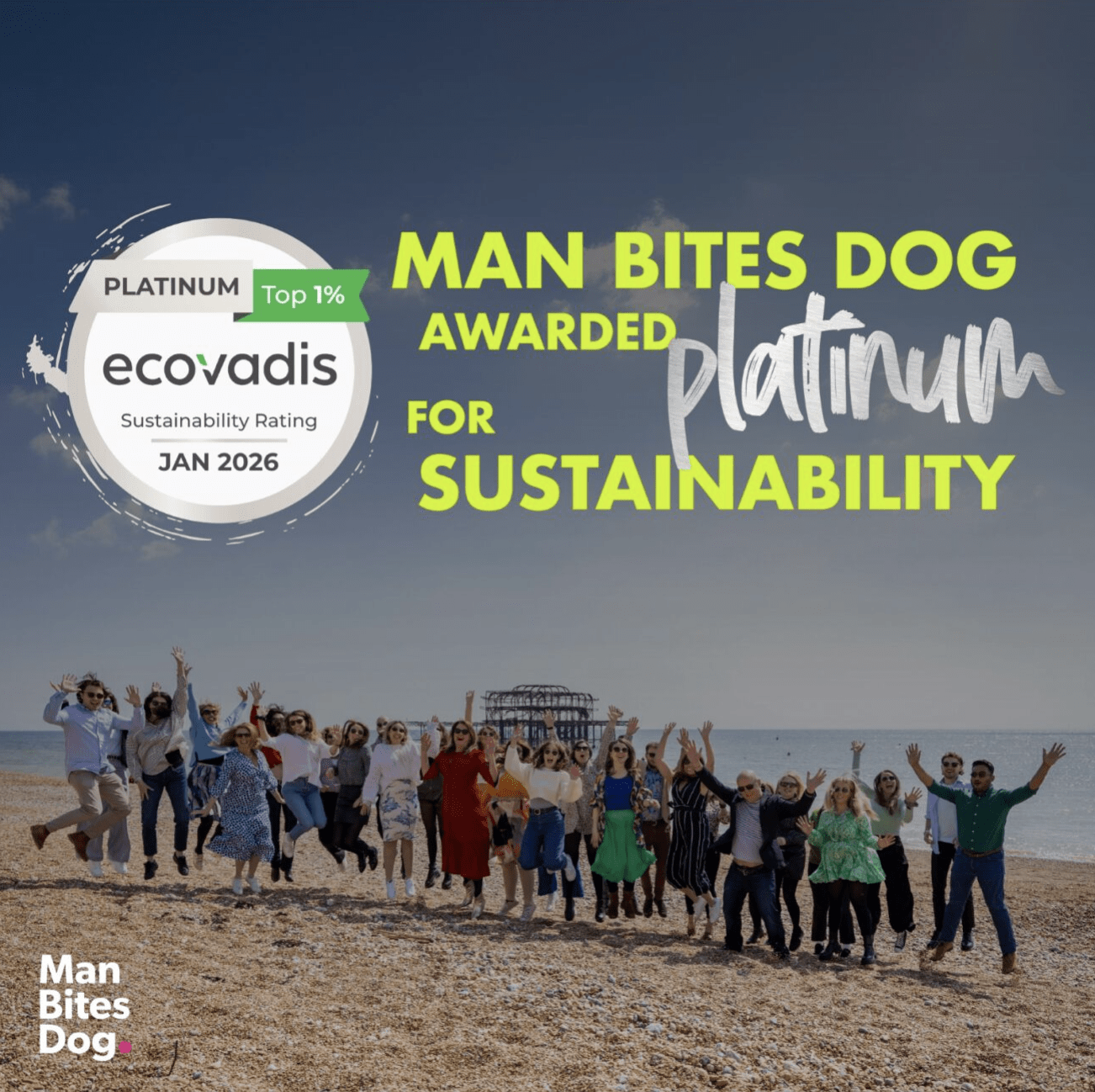
Man Bites Dog has been awarded a Platinum EcoVadis medal, placing us in the top 1% of companies assessed globally for sustainability performance.
This is a major milestone on our journey to becoming a net zero business.
We have always focused on sustainability in our work, but also in our processes: recycling, saving energy and resources, ensuring our people are looked after, and engaging with partners of a similar mindset.
Man Bites Dog Founder and Chief Executive, Claire Mason, said: “Sustainability is fundamental to our mission and how we operate. This recognition from EcoVadis is a testament to the hard work and commitment of our team, who continuously strive to improve our impact.
“Sustainability has always been core to our purpose, culture, client work and day-to-day operations. We see it not only as an ethical imperative, but as an opportunity to help shape a smarter and more equitable economy. We are determined to play our part in reducing negative impacts and increasing our positive contribution.”
EcoVadis is one of the world’s leading sustainability assessment platforms. It rates thousands of organisations across different sectors each year, covering how well they manage sustainability in four areas:
Scores are benchmarked against other companies in the EcoVadis database, with the highest performers receiving medals. ‘Platinum’ is awarded to the top 1% of all assessed companies over the past 12 months, across all industries.
Our platinum award shows that Man Bites Dog has strong policies and processes in place to manage sustainability via our CSR plan, ESG reporting and work towards UN Sustainability Goals; also that we are committed to continual improvement..
If you’d like to talk about how we approach sustainability, or what this means for working with us, we’d love to chat.
Brace yourselves for yet another piece of content on COP30, but I do have an important point to make, I promise.
As COP30 kicks off we're bracing to be inundated with generic sustainability content. The noise levels will rise, and standing out will be harder than ever. That’s why proprietary, industry-specific data – rich in insight and capable of telling a story companies haven’t heard before - is essential for cutting through the noise. It’s the kind of content that earns attention, not just airtime.
What sets a company apart is its ability to bring evidence to the table – to surface a challenge, uncover a blind spot or spotlight an emerging opportunity that others haven’t yet recognised. This isn’t just reactive behaviour; it’s proactive leadership.
And COP30 is the perfect moment to do that. Businesses should be thinking about this kind of content well ahead of any major event – whether it’s Davos, COP30, or New York Climate Week.
These global moments put sustainability in the spotlight. Governments unveil updated climate plans, and the private sector comes under the microscope. Investors, media and policymakers are watching closely, looking for signals of who’s serious, who’s innovative, and who’s shaping the future.
By publishing a data-backed study or thought leadership campaign ahead of any major climate event, companies can set the agenda by introducing new insights that influence discussions at the summit. They can position themselves as experts by owning a specific climate-related issue in their sector, drive media and stakeholder engagement through a compelling narrative that attracts attention and builds credibility, and inform policy by providing evidence that can support or challenge regulatory direction.
Generic commentary won’t cut through the noise. The most impactful campaigns are built on proprietary data that’s collected through opinion research, economic analysis, climate models, customer insights, or industry partnerships. To truly resonate, content should be anchored in a bold, original idea.
This kind of data-driven storytelling allows companies to highlight global and region-specific risks or opportunities across sectors, benchmark progress and demonstrate leadership compared to peers, and reveal trends that others have not yet quantified.
It’s not just about being a thought leader. It’s about being a thought maker – shaping the conversation, not just joining it.
To truly resonate at global gathering like COP or New York Climate Week, a campaign should be:
A great example of this approach is GHD’s water security campaign, Aquanomics. Taking the Aquanomics campaign to COP gave GHD a global platform to elevate water risk as a critical climate issue. By sharing proprietary data that quantified the economic impact of floods, droughts and storms - $5.6 trillion in potential GDP losses by 2050 – GHD shifted water from a technical challenge to a boardroom priority. This presence allowed GHD to influence high-level discussions on adaptation vs. mitigation, showcase innovate solutions like digital water technologies and strengthen relationships with policymakers and industry leaders. Ultimately, it positioned GHD as a trusted voice in climate resilience and future infrastructure planning.
Done well, climate-aligned thought leadership at major climate events can do far more than tick ESG boxes. Positioning as a climate leader strengthens brand reputation and attracts values-driven customers and top-tier talent. Partnership opportunities emerge with governments, NGOs and investors – creating new markets and shared value. Companies gain influence over regulation, shaping the rules instead of simply reacting to them. Also, new revenue streams open up, from green products and services to sustainable finance.
These events aren’t just summits, they’re strategic moments for business reinvention. They’re where sustainability meets profitability, and where bold leadership translates into long-term value. But in this new climate economy, insight is as powerful as action.
For businesses, harnessing proprietary data will be a game-changer. It will empower evidence-based narratives that don’t just speak of change - they will validate it.
At global climate events, those who bring insightful, data-driven stories to the table won’t just be seen as responsible, they’ll be seen as visionary. For those ready to act, sustainability isn’t just about doing good, it’s about turning climate ambition and data-backed thought leadership into a competitive edge that builds brand awareness and advances positive change.
If you'd like to discuss a data-backed campaign please get in touch.
Time is ticking. COP30 is just around the corner, and 2030 – the year by which global emissions need to fall by 43% to stay on track for the 1.5-degree target – is less than five years away. Yet, despite the urgency, and despite facing a myriad of challenges, governments and business might be losing sight of the timeline. This year marks a critical moment: countries are expected to submit updated national climate plans, but the reality is, they’re unlikely to close the gap.

So, what does this mean for the built environment? And why should businesses in this sector be thinking seriously about how they communicate sustainability right now?
Let’s start with the obvious: the built environment is responsible for nearly 40% of global carbon emissions. That’s huge. But it’s also one of the most powerful levers we have for climate action.
Beyond reducing emissions through green building design, energy efficiency and circular construction, the sector can actively contribute to climate solutions – from integrating renewable systems into infrastructure, to designing buildings and public spaces that support climate adaptation and resilience. Think solar rooftops, passive cooling, flood-resistant design and nature-based solutions.
The potential is enormous. COP30 needs to be a turning point – not just for governments, but for businesses in the built environment who are uniquely positioned to shape a low-carbon, climate-resilient future. And to do that, they need to communicate it – clearly, consistently, and compellingly. Because effective sustainability comms can raise awareness, build trust and inspire action across the industry and beyond.
One of the key issues facing COP30 this year will be money. Financing the transition to net zero – especially in infrastructure-heavy sectors like construction and real estate – is complex. Without clear, credible pathways for implementation, climate targets risk remaining just words on paper. This is where business voices matter. When companies in the built environment show up, share their progress, and align with COP30’s themes, they help shape the conversation in a way that’s grounded in reality. They also help counter the narrative that climate action is bad for business.
In fact, climate action can be a catalyst for economic opportunity. Climate resilient infrastructure is more insurable and investable. And as regulations tighten and investor expectations shift, businesses that lead on sustainability are better positioned to access capital, win contracts and future-proof their operations. In short, sustainability isn’t just good for the planet – it’s good for the bottom line. So why not make that message louder and clearer?

Sustainability comms isn’t just about purpose anymore – it’s about performance. The messaging that feeds all your global marketing and comms needs to talk about how sustainability drives profitability, resilience, and long-term growth. For businesses in the built environment, that might mean highlighting how a modernised grid fuels economic growth, or how energy efficient retrofits reduce operational costs, or how climate-smart design improves investability.
But it’s not just what we say – it’s how we say it. Language matters more than ever. As COP30 approaches, marketers and communicators need to understand how sustainability language lands with different audiences across the globe. There’s a real perception gap: terms like “net zero”, “sustainable”, or “green” are interpreted in wildly different ways, leading to confusion and misalignment. Establishing a shared, consistent, global language is essential to unify understanding and drive meaningful action.
The built environment has a significant role to play in the climate transition – and it’s time for the sector to speak up. Whether it’s through data-backed thought leadership that highlights a challenge or an opportunity, on-the-ground storytelling that brings the industry’s work to life, or executive profiling that positions businesses as champions of accelerating the transition, having a unified, global sustainability marketing strategy in place can help bridge the gap between ambition and action.
If COP30 is to be more than just another climate conference, businesses – especially those shaping the spaces we live and work – need to speak up and show they’re part of the solution – and that the solution makes smart economic sense for everyone.
In our latest webinar, 'Uncharted Waters', Man Bites Dog’s Sean Farrance-White was joined by water industry experts Ania Grobicki, Lead Water Advisor at the Food and Agriculture Organization of the United Nations, Rod Naylor, Global Water Lead and Kathryn Newland, Marketing Communications Lead at GHD.
Using the award-winning Aquanomics thought leadership campaign as an example, the panel highlights how impactful sustainability marketing can elevate an organisation’s reputation and help build relationships, generate revenue and create real-world impact.
The panel explored how the Aquanomics campaign was developed using Man Bites Dog’s 4D strategic ideation model. Our team identified an opportunity to quantify the economic impact of global water risk, alongside in-depth research and expert interviews to form the basis for the content. The research revealed that droughts, floods and storms could wipe $5.6 trillion from global GDP between 2022 and 2050. Aquanomics boosted GHD’s brand visibility and empowered the firm to share its message at the UN’s Conference of Parties (COP) for the first time.
Watch the Webinar now to learn:
You’ll come away with:
To find out about how we can help your brand create stand-out, award-winning thought leadership, and the benefits of using diverse content forms to enhance the reach and impact of your campaigns, please get in touch here.
This technology marketing masterclass – hosted by Man Bites Dog’s Head of Technology Division Fiona Buckley and featuring Patrick Cassleman, Senior Director, Sustainability Center of Excellence at Intel and Man Bites Dog CEO Claire Mason – explores marketing at the convergence of sustainability and digitalisation.
For business leaders, technology plays a paradoxical role in the sustainability agenda. This is because fundamental business functions such as global computing, data centres and data transmission networks are inarguably significant contributors to carbon emissions, water use and e-waste. There is a scale that needs to be balanced: demand for computing performance vs reducing environmental impact.
In this webinar, the panel discussed The Sustainable CTO, a global thought leadership platform developed by Man Bites Dog and Intel, which shines the spotlight on tech leaders as pivotal sustainability influencers in the corporate C-suite. Patrick, Claire and Fiona explain how Intel has used this platform to engage with C-suite buyers and supercharge sales.
The panel also dived into The Sustainable CTO, a thought leadership initiative created for Intel in partnership with Man Bites Dog. The study gathered insights from 2,020 global business leaders from 22 markets to share their triangulated perspectives as CTOs, CEOs and chief sustainability officers (CSOs) in the world’s largest companies. The Sustainable CTO initiative introduced a new model of tech leader with the potential to become the greatest driver of sustainability in the corporate C-suite. Man Bites Dog positioned Intel as a thought leader in sustainability by moving the agenda beyond ‘tech zero’ to ‘tech positive’.
Tech Zero: Reducing the carbon footprint of an organisation’s IT function.
Tech Positive: Using technology as a lever for the whole organisation to reach its net-zero goals and to have a positive overall impact, driving business growth and accelerating innovation.
The webinar also broke down five practical steps to successful thought leadership.
Fiona, Patrick and Claire discussed the power of implementing all five of these elements to see both internal and external results across your organisation. Specifically, the panel discussed the opportunity that this content can bring to sales teams. By giving them original data on a topic of key interest to their client's business success, such as sustainability, they can have informed and educated conversations with those clients, forming stronger relationships.
To learn more about the power of thought leadership and what it could mean for your organisation, reach out to us at [email protected]. For the latest updates on Man Bites Dog events and content, register for future event invitations here, or follow us on LinkedIn.

At Man Bites Dog we spend a lot of time thinking about megatrends. Over the last year we have calculated the financial returns on climate adaptation in emerging markets, delved into the impact of the global energy crisis and explored the role of technology leaders within organisations in pushing through sustainability initiatives. Often our thinking on these megatrends involves trying to find a new counterintuitive angle, or exploring how trends currently impacting businesses might interact with each other.
But in 2024, one megatrend – and two letters – is dominating our thinking more than any other: AI. Depending on your perspective it’s either coming for your job or it will save humanity. The reality is probably somewhere in between, but what is certain is that it will change (almost) everything. Recent trials of Microsoft’s GPT-powered Copilot found 70% of knowledge workers said they were more productive when using the AI tool. Repetitive tasks in the accounting and legal professions are set to be automated out of existence, whilst the application of AI to some of the complex industrial processes or the creation of “digital twins” will create huge real-world efficiencies. And anyone who has attended a marketing event or scrolled through a social media timeline recently (i.e. everyone) is met with fevered speculation about how generative AI will disrupt the marketing industry.
However, it is perhaps using artificial intelligence to tackle the biggest and most complex challenge of them all – the climate crisis – where it will have the greatest impact. To achieve a global net zero, the next 25 or so years will require a transformation of business the likes of which the world has never seen. The energy sector needs to decarbonise first and fast (see Supercharging Net Zero, our research project with Arcadis) whilst hard-to-abate sectors such as steel manufacturing will need to revolutionise their processes to produce products without fossil fuels. The full might of international capital markets will need to be thrown at millions of decarbonisation projects across the globe and, in a world of rising sea levels and increased extreme weather events, we will need new and innovative technologies to help communities adapt.
The good news is – it’s already happening. AI is already being used to intelligently manage power grids to ensure supply better meets demand and it is running as efficiently as possible. The technology is being integrated into accounting software to help businesses track their scope 3 carbon emissions. And the potential for ‘industrial AI’ to optimise processes – and therefore reduce emissions – in the advanced manufacturing, built environment and infrastructure sectors is huge. However, even to the giddiest techno-optimist, it's clear that the huge amount of data centre capacity needed to underpin ubiquitous AI will lead to an equally huge carbon footprint. According to some estimates, the tech sector as a whole could account for a whopping 14% of global emissions by 2040.
But what does this mean for B2B marketing teams and their thought leadership? As with all disruptions for forward-thinking B2B organisations, the AI revolution creates opportunities for growth as their clients seek guidance on what happens next. By undertaking research-backed thought leadership around the impact of AI on the sustainable transition within their sector, marketing teams can cater to that demand – helping their customers navigate the disruption and seize the opportunity of AI.
Does this sound relevant to the conversations you're having with your clients? Get in touch with the Man Bites Dog team to find out how we could help.
M
an Bites Dog has been awarded a Gold rating by EcoVadis for excellence in sustainability management, placing the consultancy in the top 5% of companies assessed by the platform.
EcoVadis, which provides sustainability assessments and benchmarking to more than 125,000 businesses across the world, assesses organisations against a range of dimensions, including environmental, labour and human rights, and ethics and sustainable procurement.
Man Bites Dog’s Gold rating demonstrates advanced business processes and management systems across the spectrum of ESG. This includes a robust environmental management system, which is certified by ISO 14001, and a commitment to running an ethical, inclusive business.
Mary Maher, Man Bites Dog’s Managing Director, said:
“This Gold award is the culmination of years of assessment, review and improvement from our operations team and the wider business, ensuring that we continue to operate sustainably and improve our business practices, in line with our environmental commitment.
Over the last year, one of our key focus areas has been the sustainability of our supply chain, which was noted as an area of considerable improvement by EcoVadis.
We’re very proud to receive the Gold rating as a mark of our ongoing commitment to sustainability, and we continue to work on improving our environmental impact.”
In our webinar, ‘Much Ado About Greenhushing’, Man Bites Dog’s Divisional Director, Duncan Sparke, and Associate Director, Sean Farrance-White, were joined by industry experts Miles Lockwood, from the Advertising Standards Authority, and John Batten, from Arcadis. The session covered how communicators can navigate the thin green line of sustainable messaging and authentically articulate their organisation’s perspective on the sustainable transition using data-backed thought leadership. To catch up on the webinar, watch the recording below.
The panel discussed the concepts of greenwashing and greenhushing and the implications of both on businesses and, ultimately, sustainable progress. While greenwashing often steals the spotlight, greenhushing poses a formidable and often understated challenge. Greenhushing presents a direct threat to progress by impacting an organisation’s ability to collaborate and communicate effectively.
Our session also explored the dangers in diluting the debate down into just an option between greenwashing vs. greenhushing. This simplistic approach reduces the choice in marketing strategies to either bombastic and untrue claims or complete silence. The focus, rather, should shift toward creating accurate messaging that authentically mirrors a company’s true sustainability efforts. While businesses in high-carbon sectors should be cautious, the solution for most industries is straightforward: keep your communications honest, limited, simplified, qualified, and authentic.
The examples provided during the webinar helped to illustrate the difference between exaggerated claims and more considered messaging; this balance helps consumers make more informed choices and allows businesses to have confidence in their messaging.
This can be achieved by following the below core principles:
· Make sure what you say is interesting and meaningful.
· Back up what you say with data.
· Ensure what you say is relevant to your business and your sector.
An example of a sustainability thought leadership campaign that successfully followed these principles is Arcadis’ Sustainable Cities Index. This annual campaign is built on new, credible, and substantial data that pushes forward the urban sustainability debate.
During the Q&A session, several critical topics were addressed such as:
· The influence of data-backed campaigns on organisations and their internal ambitions and enthusiasm.
· How to keep data fresh in an ever-evolving landscape.
· The challenges of carbon offsetting and carbon neutrality claims.
· The possibility of businesses moving closer to academics in their future thought leadership.
· How data-backed campaigns can inform wider communication strategies.
The webinar highlighted the critical role of accurate, data-backed sustainability communication in combating greenwashing and greenhushing. In an era where sustainability is a shared responsibility, the panel revealed that credibility, honesty, and data-driven insights are the keys to driving positive change.
To kickstart your brand's sustainable go-to-market strategy, reach out to us at [email protected] and explore our sustainability marketing solutions.
For the latest updates on Man Bites Dog events and content, register for future event invitations here, or connect with us on LinkedIn.

Much attention has been paid recently to “the great resignation” – the pandemic-inspired talent exodus. It’s a phenomenon causing headaches for companies across the business spectrum – companies that aren’t sophisticated enough when it comes to delivering the new working models employees demand.
This sudden talent shift has eroded value from otherwise commercially-sound businesses, for no reason other than their failure to fully recognise that people want to work in different ways than they did three years ago.
You might say, “this stemmed from a global pandemic, it’s a unique situation”. But there’s a far-reaching lesson here: employees have become powerful activists within their businesses – underestimate them at your peril.
Green ultimatum
Nowhere is this employee activism more apparent than when it comes to companies’ sustainability strategies. Man Bites Dog conducted research among 10,000 employees across the globe and found that close to half (43%) of employees would leave their job if the company they worked for was not obviously working to reduce its carbon emissions.
At a time when talent scarcity is already on the boardroom agenda, those numbers are certainly a concern, but they’re also an opportunity.
For progressive businesses struggling to recruit, it underlines the importance of sustainability to an employer brand. Meanwhile, businesses who’ve put sustainability on the backburner in favour of near-term growth need to know that the grass is greener on the other side, and their employees will be tempted away. Much of the value they add will depart with them, putting that near-term growth back under threat.
Go green or go home
Perhaps most importantly of all, these statistics starkly illustrate that any business lacking a defined, well-communicated sustainability strategy is acting against its own interests. With pressure from investors pushing down on organisations, and pressure from employees pushing up, there’s no longer any space for laggards.
Those of us with the task of communicating our firm’s sustainability strategy and wider environmental influence within the asset management industry find ourselves right at the centre of a Venn diagram. We are directly beholden to these two activist groups at the same time: employees and investors. But through that central position, we also have an unmatched opportunity to influence the fate of not only our own businesses but the wide range of businesses that we channel investment into.
The option to sit on the sidelines and see what happens no longer remains. Sustainability is here to stay, but the opportunity to differentiate is becoming elusive as the bandwagon gets crowded. Firms must go further than ever before, they must take a stand and truly mean it, backing up their intentions with evidence of progress and commitment. They need to find increasingly creative ways to communicate their unique strengths in a way that stands out.
It’s a vast and complex challenge that each firm must face up to with its own bespoke, carefully crafted communications strategy. For those who succeed, there will be spoils – and a planet on which to enjoy them. For those who don’t try, the cost will be astronomical.
EcoVadis, the world’s largest and most trusted provider of business sustainability ratings, has awarded Man Bites Dog Silver Medal status in recognition of its excellent sustainability performance.
The EcoVadis Rating provides a benchmark for measuring an organisation’s environmental, social and ethical performance, scoring businesses on the quality of their sustainability management systems in relation to environment, labour and human rights, ethics and sustainable procurement.
By achieving EcoVadis Silver, Man Bites Dog has been recognised as being within the top 25% of organisations that use the platform.
In the Netflix black comedy Don’t Look Up, the astronomer Randall Mindy (played by Leonardo DiCaprio) appears on breakfast TV to explain that humanity faces an existential threat from a 6km wide comet that is hurtling to earth. His lengthy explanation, which includes precise technical details of how the scientists found the comet, unsurprisingly falls on deaf ears and the scene ends with Mindy’s colleague, PHD candidate Kate Dibiasky (played by Jennifer Lawrence), losing her temper with the chirpy breakfast show hosts.
Whilst the threat of the climate crisis is not quite as immediate as a planet-killing comet, it is not far off. Earlier this year the IPCC warned that emissions increasing at their current trajectory would result in “irreversible” impacts and that 40% of the global population are “highly vulnerable” to climate risk. Mitigating the worst effects of this planet-wide heating will require a fundamental shift in the global economy. Yet, unlike dealing with a comet, the core technologies and financial muscle for achieving net zero are available today.

Carbon Tracker have shown it would take just 0.3% of the global land area (less than is currently used for fossil fuel infrastructure) to meet the entire world’s energy needs through solar energy. Personal transportation, once one of the most carbon-intensive sectors, is in the midst of an electric revolution with over 6% of global car sales being an EV in 2021 – more than double that of 2020 sales. And with Bloomberg predicting that ESG assets could hit $53 trillion by 2025 (30% of total assets under management) it appears the financial firepower to get clean-energy and low-carbon transport projects off the ground is starting to lift off.
However, despite these real-world building blocks for net zero being available, like the scientists in Don’t Look Up, businesses working to decarbonise are struggling to get their sustainability stories heard. In a world where stories about practical solutions to help mitigate the climate crisis are competing in a news cycle that prioritises simple, immediate, and tangible content, businesses need to shape their messaging to fit with this reality. This doesn’t mean deviating from core values – and certainly doesn’t mean greenwashing – rather, packaging businesses’ commitments in a way that can easily be understood by as many people as possible.
The road to net zero will require comms people to play a major role within their organisation to help their business thrive in a sustainable economy. This will mean bringing diverse viewpoints into your business to help ensure your sustainability story is understood by as wide a section of society as possible. It will require people with a PR background gaining a seat at the boardroom table so well thought-through communication is embedded into net-zero transition strategies from the start. And, perhaps most importantly, it also means helping businesses articulate how they are contributing to net zero in a way that is clear, relevant and impactful.
At Man Bites Dog, we partner with some of the world’s leading B2B brands to help them carve out their green space and tell their unique sustainability story through bold data-led campaigns. For instance, we recently highlighted the risk of a “lost decade” as companies postpone action on climate change – and revealed that 55% of corporates are not transitioning fast enough to reach net zero by 2050. We developed a campaign that quantified, for the first time, the global tipping points that would need to be achieved in order to achieve mainstream EV adoption. It revealed consumers are waiting for a price point of $36,000, a charge time of 31 minutes and a range of 469km before they will make the switch to an EV. We also recently partnered with a client to explore the fundamental role of the energy sector in decarbonising the global economy which demonstrated that the industry would need to halve their emissions this decade if the world is to achieve net zero.
Articulating how businesses are meeting the challenge of net zero is one of the biggest jobs for comms people today. Without bold and simple stories that are intrinsically tied to brand purpose, campaigns can risk ending up misunderstood or ignored like the Don’t Look Up astronomer’s appearance on breakfast TV.
If you have an interesting sustainability communication challenge feel free to reach out directly at [email protected] or the wider team at [email protected].
As the World Economic Forum Annual Meeting 2022 draws to a close we’ve been reflecting on some of the key themes discussed this year in Davos.
With the theme, History at a Turning Point: Government Policies and Business Strategies, this year’s event saw almost 2,500 leaders gather to tackle global issues and find solutions to the world's most urgent challenges including the ongoing global pandemic, the war in Ukraine, geo-economic shocks and climate change.
Here are a few of our top takeaways from the first in-person event in almost two years:
Business leaders can be overwhelmed with reactive challenges, so it’s been helpful to see this year that ESG and sustainability are still top of the agenda across the C-suite. And there is acknowledgement that food security and climate change are converging. Food shortages are made worse because of rising global temperatures, with examples even in recent weeks such as South Asia’s heat waves and floods, wildfires in the US West and extreme temperatures in the Middle East and southern Europe. These kinds of climate-related events affect food security, negatively impacting on crops and food exports. The continued threat of climate change is huge, and organizations are still mapping out their own net zero journeys, so it was good to see so much emphasis on it despite such geopolitical uncertainty.
An interesting area of conversation this year was increased emphasis on sustainability standards. Companies use an array of voluntary sustainability reporting frameworks. However, without the adoption of consistent standards, it is difficult for stakeholders to make the like-for-like comparisons that are critical for capital investments and understanding companies’ impact. There is continued concern that voluntary frameworks can be a barrier to transparency, enabling selective reporting and potential greenwashing. However, those with frameworks in place are at least demonstrating action over discussion towards net zero transition.
A panel on ‘making the metaverse’ was an exciting moment this year. Gaming apps and virtual reality headsets have created the gateway to a virtual environment that is now playing host to millions of people each day, with participation very heavily skewed towards children and young people. It is all happening fast, and we need clear codes of behaviour and ethics in place. The metaverse offers exciting opportunities for companies if it is safe. There will be different surfaces, objects, clothing and footwear on which companies can display their brands. It is the commercial opportunities that this affords that will support and build the metaverse we want. So, with the metaverse moving from escapism and gameism, to commercial utility, the potential for the metaverse is huge and a myriad of experts and voices will determine what it will look like.
The future of work is another really exciting theme that businesses need to continue to explore. This year, leaders at Davos discussed the benefits of a four-day work week, highlighting the merits of flexible work and the importance of this in encouraging greater productivity and crucially, in retaining talent. Conversations highlighted that often, employees are less concerned about where they work, but place a higher value on when and how much. In the United Arab Emirates, the government introduced a shorter work week earlier this year. Around 70% of employees reported working more efficiently, while there was a 55% reduction in absenteeism, according to the country’s minister for government development and the future.
For nearly 50 years the annual meeting has provided a unique environment for global leaders to reconnect, exchange insights and obtain fresh perspectives. There were certainly some exciting and interesting themes from Davos this year, signalling its continued relevance and importance as a milestone event in the calendar for leaders to reflect on, and advance, actionable change.
Find out how you can use thought leadership to supercharge brand and sales.
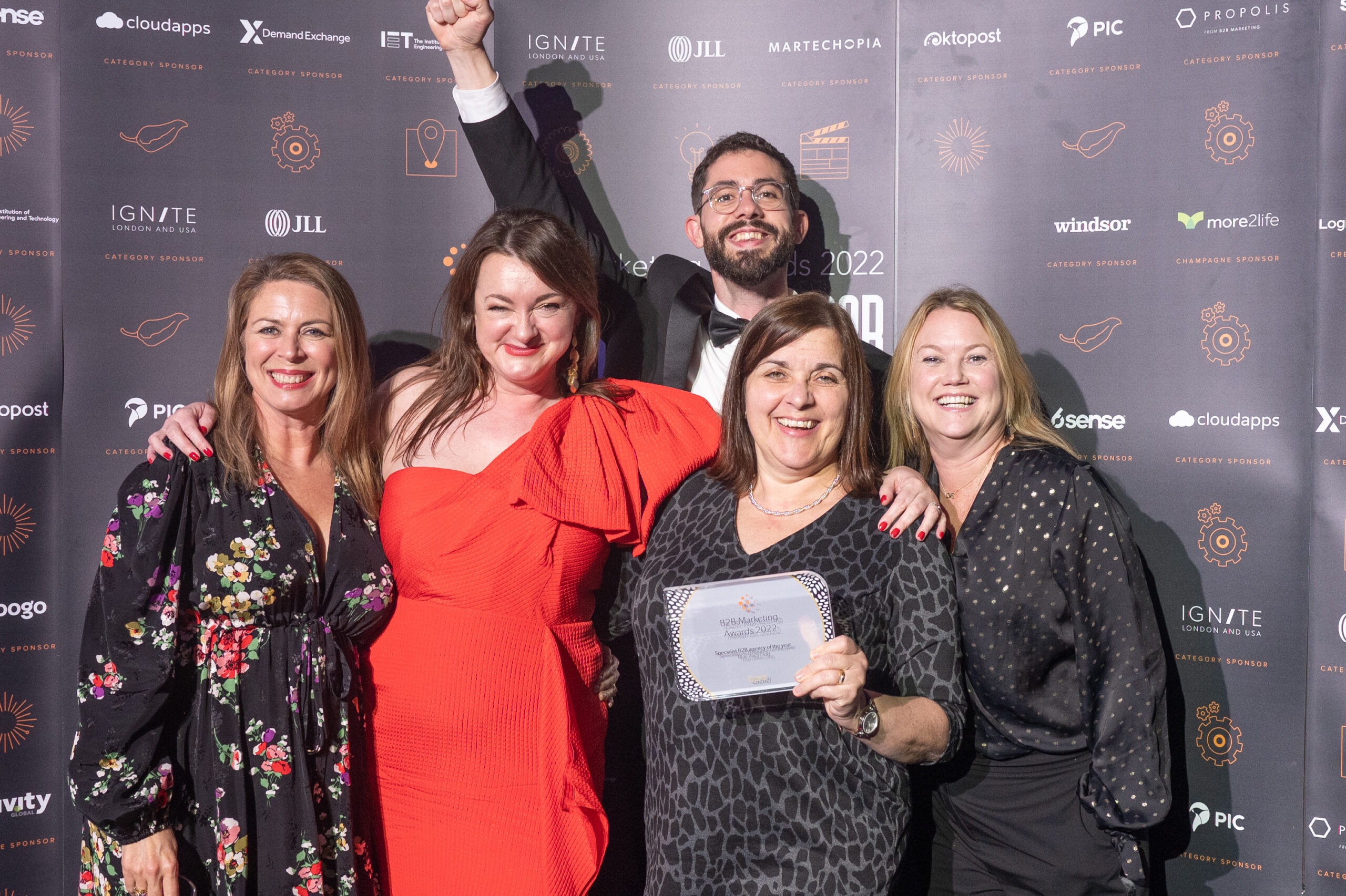
Man Bites Dog has been named Specialist Consultancy of the year in the B2B Marketing Awards.
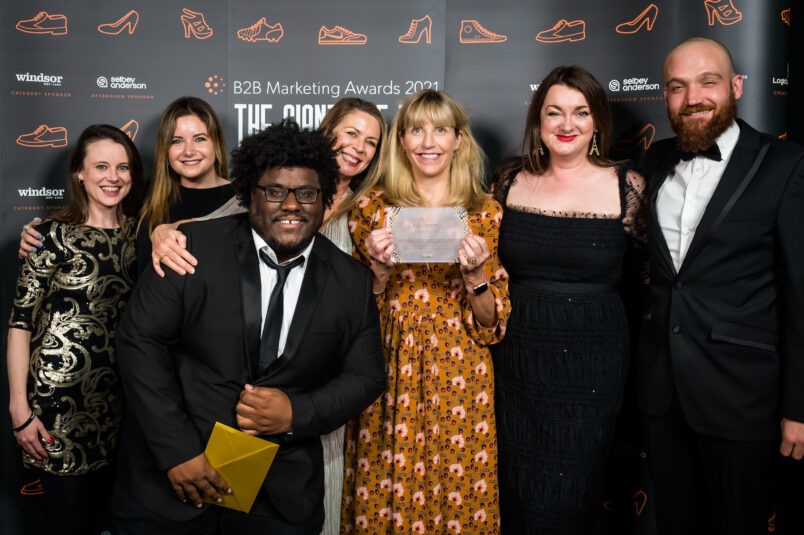
Our award-winning Zeronomics campaign for Standard Chartered is a cornerstone example of the storytelling, positioning and strategic work we do at Man Bites Dog.

Man Bites Dog recently partnered with Women in Journalism to conduct a major new study on gender inequality in UK journalism and media.

For some years now, we have been campaigning to close The Gender Say Gap, a term we coined to highlight the invisibility of women and diverse leaders as expert authorities in business and public life.




Head Office
Moore House
13 Black Lion Street
Brighton
United Kingdom
BN1 1ND
London Office
24/25 The Shard
32 London Bridge Street
London
United Kingdom
SE1 9SG

+44 (0) 1273 716 820
[email protected]
Man Bites Dog Ltd. is a company registered in England and Wales with company number 05156769. Registered office: Moore House, 13 Black Lion St, Brighton and Hove, Brighton BN1 1ND. VAT No: GB854451518.