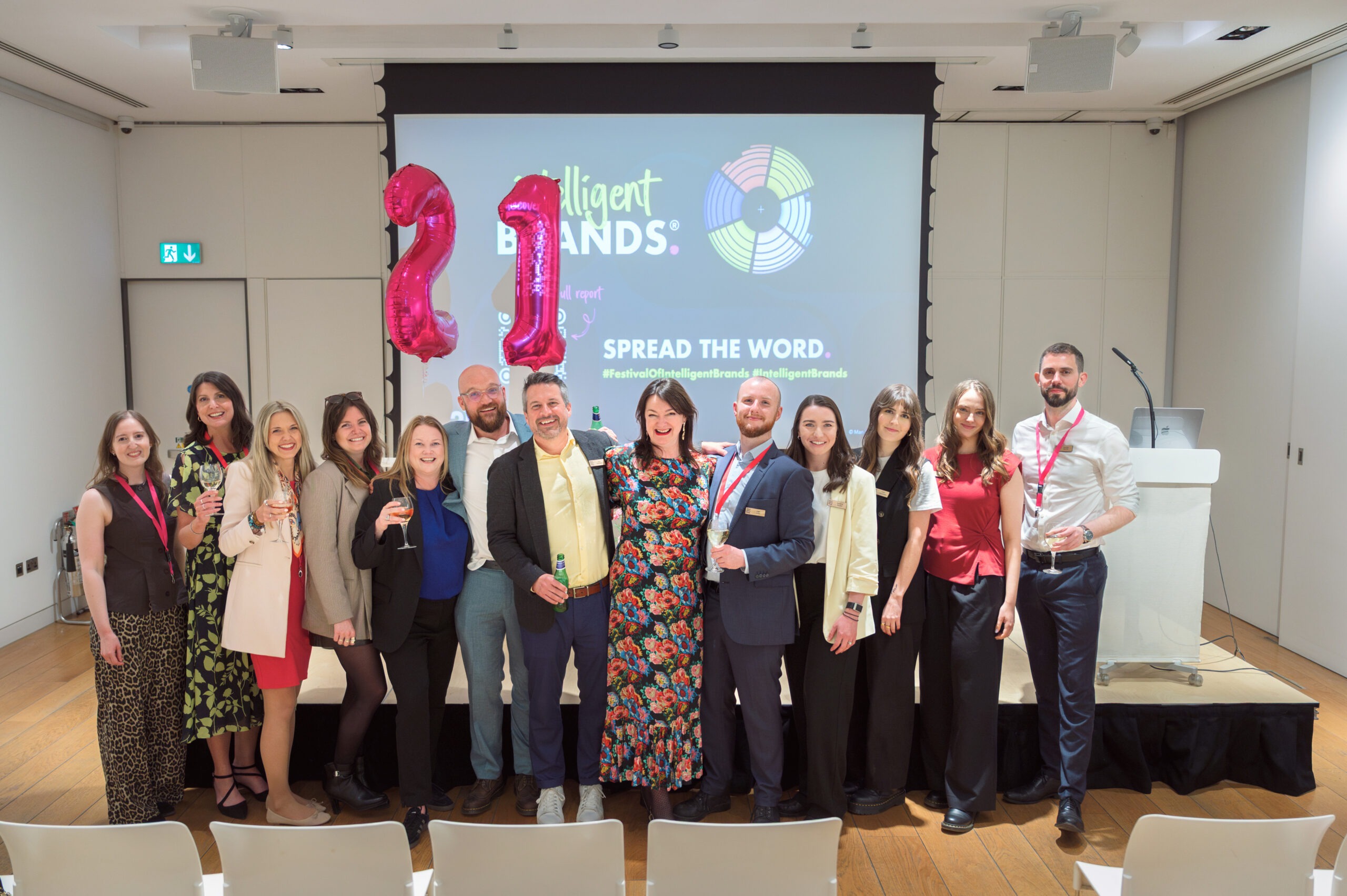
Man Bites Dog’s Festival of Intelligent Brands® marked 21 years of thought leadership. It was also a moment to confront the biggest challenge facing B2B marketing today: how to deliver growth.
Markets are more complex, buyers are more cautious, and the volume of content competing for attention is overwhelming. At the same time, the pressure on global organisations to deliver meaningful, sustained growth continues to build. B2B has become high-stakes.
Man Bites Dog’s Intelligent Brands® research reveals that organisations can no longer trade on trust alone. The ones pulling ahead successfully demonstrate their superior ideas, deeper expertise, stronger data and smarter use of technology. We call this intelligence advantage.
Across an afternoon of keynotes and panels, three key themes stood out: the renewed importance of big ideas, the shift to intelligent sales, and the emergence of a new age of experts.

For years, thought leadership has been positioned as a tool for awareness and reputation building – and this still holds true. As Alessandra Almeida Jones, Global Chief Marketing Officer at BCLP, reflected in her opening keynote, thought leadership is the “glue” that holds the marketing mix together. But as AI lowers the bar to content creation, there’s a risk of volume over value.
Clients are more informed – and more sceptical – than ever. They’re looking for partners with a distinctive point of view grounded in real insight. With this, marketing teams must make the move from broadcasting messages to enabling meaningful knowledge exchange that helps clients make better decisions. Rather than reacting to the agenda, they must help shape it.
Brian Macreadie, Head of Marketing at Addleshaw Goddard, argued that the biggest risk to today’s marketers is not failure, but invisibility. Safe, technically competent work rarely cuts through; it’s the work that subverts expectations and sparks a reaction that gets noticed.
The real opportunity lies in demonstrating you can see what’s coming next. Traditionally, ‘foresight’ content took the shape of definitive “state of the world” reports, but today, businesses must be prepared for multiple futures. It calls for more scenario-based thinking, designed to be explored, stress-tested and applied in real time.
The result is a different kind of impact. Big ideas don’t just build reputation or support growth: they have the power to drive decisions, transform careers and, at their best, reshape entire industries.
If thought leadership is evolving, so is the way we use it. The most effective marketing teams no longer treat thought leadership as an output, but as a way to shape client conversations, guide decision-making, and create lasting competitive advantage.
Our panel on the new growth playbook for Intelligent Brands featured Alessandra Almeida Jones, David Gentle, Head of Strategic Marketing at Fujitsu, and Michaela Heselton, Marketing Director at Kearney. Speakers explored what this looks like in practice. The discussion focused on how to build decision‑grade confidence by rethinking the traditional funnel and bringing sales and marketing together as a true Growth Department.
A recurring theme was the need to move away from what one panellist described as “random acts of marketing”, driven by internal demand rather than external need. The alternative is a more client-intelligent model, which starts with a deep understanding of priority audiences and the problems they are trying to solve.
As one panellist put it, “AI has given us wings”, enabling far more granular segmentation and tailored engagement at scale. Marketers can now combine data, market intelligence and human expertise to create highly personalised journeys that were previously out of reach within existing budgets and teams.
Our second panel – featuring Brian Macreadie, David Keene, Co-Founder & CRO at Agentive, and Mwamba Kasanda, Global Marketing & Corporate Communications Leader – explored the role of human intelligence in a world shaped by AI. As new tools speed up everything around us, they also create space to slow down and focus on what matters most. That means investing more time in strategy, but also getting back to the fundamentals, like challenging tone of voice, ensuring brand values are meaningfully demonstrated in our work and sharpening points of view.
But technology alone isn’t the differentiator; David Keene said that the effective application of AI is “a black belt skill”. Effective prompting, smart iteration, and the ability to create agents which will assist you in future all take time to develop. In many ways, AI is making the process more rigorous, raising expectations around the quality and relevance of what’s produced. And in doing so, it’s bringing something else into sharper focus: the value of human expertise.
The direction of travel? Towards work that’s more distinctive, more impactful and, crucially, more human. Because while AI produces content that’s clean and technically sound, it lacks texture. It can feel interchangeable. Increasingly, what stands out is work with perspective, nuance and even a degree of imperfection.
Ultimately, it’s about connection. Audiences respond to content that feels real, and this is changing how expertise shows up. Individual, credible perspectives are becoming more important within organisations. The voices behind the brand matter, particularly when audiences are looking for insight they can relate to and trust.
In the new age of experts, it’s not just what you know but how you think that sets you apart.
Marketers may be in a period of transformation, but so are their clients, and the markets they serve. With go-to-market models and commercialisation strategies in flux, this is the marketing team’s moment.
Our final keynote brought the focus back to something more fundamental: learning. Helen Tupper, Co-Founder & CEO of Amazing IF, explored, in a world defined by rapid change, how the advantage belongs to those who can learn fastest. Not just in a formal sense, but by embedding learning into everyday work through questioning, experimentation and reflection.
An intelligent brand builds decision-grade confidence by combining insight, clarity and relevance. It integrates marketing, sales and strategy into a coherent growth model. It uses AI to enhance thinking, not shortcut it. And it is willing to be bold enough to stand out in a crowded market. That is what will define growth in the years ahead.
Stay tuned for more insights from our Intelligent Brands research and event.
Take the Man Bites Dog Intelligent Brands Assessment to discover how your organisation performs across the six dimensions. Find out where your strengths are as well as where there are opportunities to build your Intelligent Brands status.
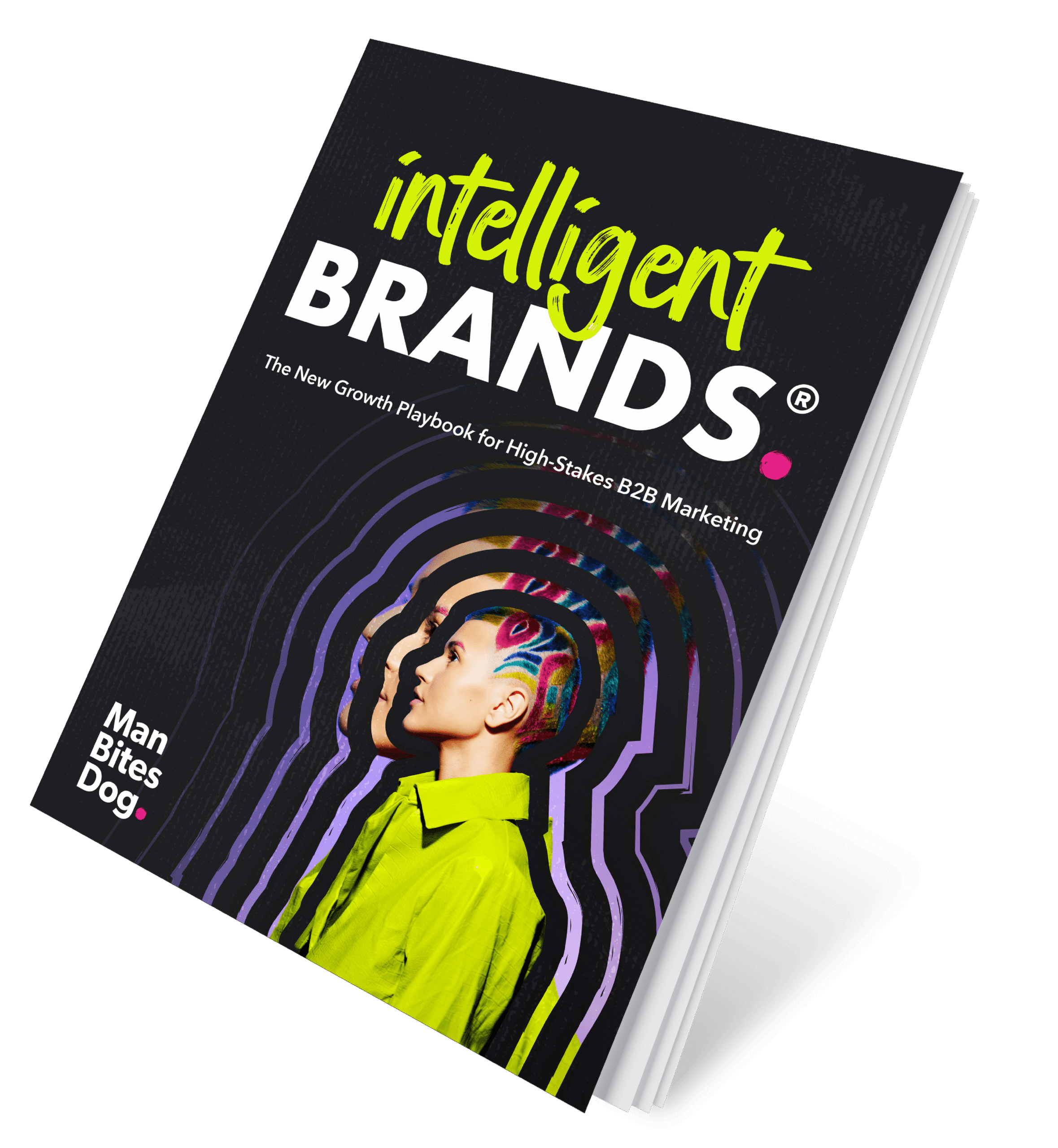
Download the Intelligent Brands report to explore the data in more detail and get a practical framework to inspire decision-grade confidence in your customers.
And if you want to speak to the team, get in touch.
Head Office
Moore House
13 Black Lion Street
Brighton
United Kingdom
BN1 1ND
London Office
24/25 The Shard
32 London Bridge Street
London
United Kingdom
SE1 9SG
Man Bites Dog Ltd. is a company registered in England and Wales with company number 05156769. Registered office: Moore House, 13 Black Lion St, Brighton and Hove, Brighton BN1 1ND. VAT No: GB854451518.