
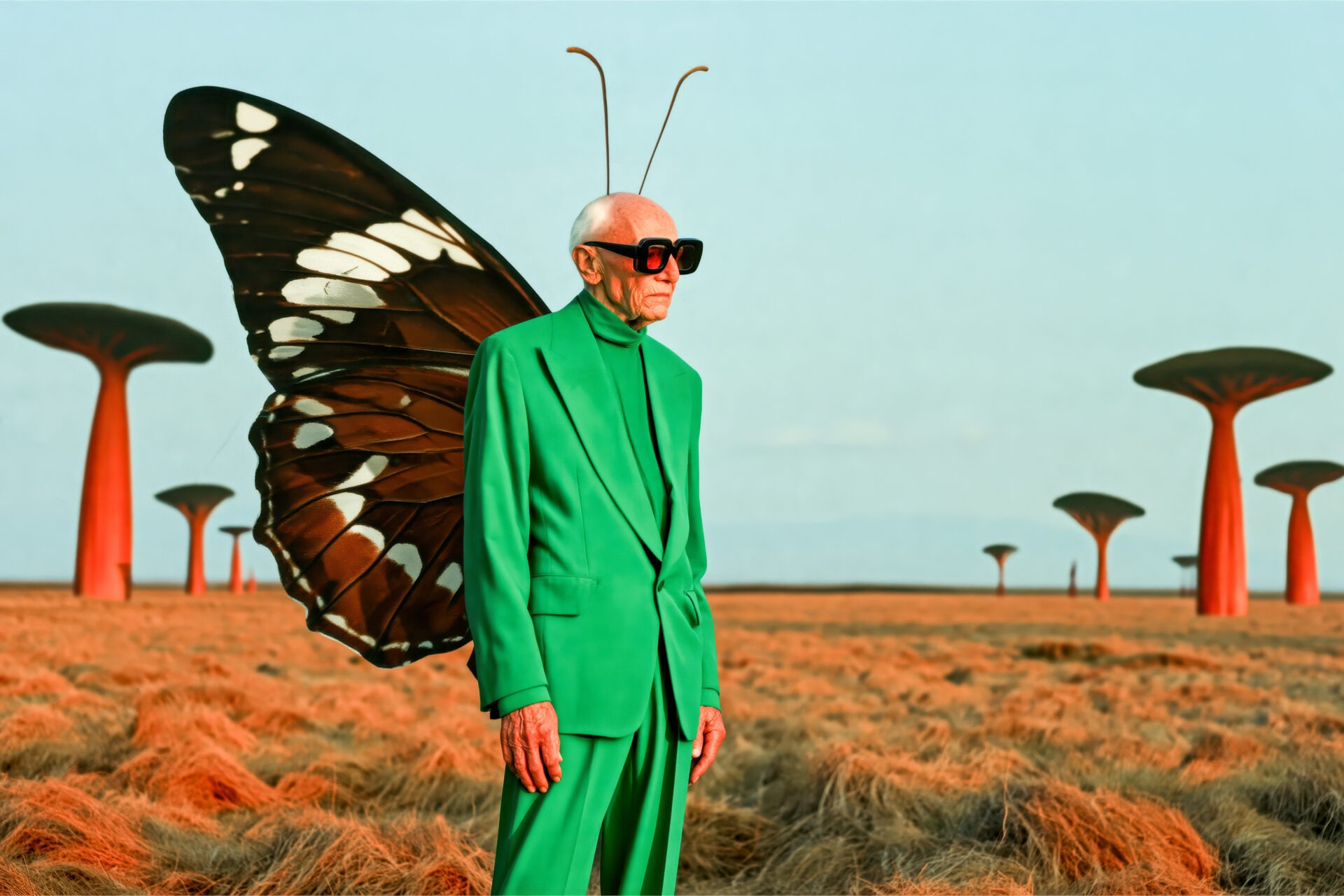
For years, surrealism occupied the fringes of visual culture. It was the language of experimental art movements and niche creative communities. Today, surrealism isn’t just trending. What was once considered a countercultural aesthetic, it has now become the fastest-growing cultural shift, reshaping branding and redefining visual storytelling across industries with mind-bending graphics.
Fashion houses such as Gucci, Loewe and Schiaparelli have embraced dreamlike imagery, while commercial brands are increasingly experimenting with surreal visuals to cut through crowded digital spaces. Graphic design, meanwhile, is leaning into unhinged surreal stillness, giving itself permission to have fun again.
We see this shift as a huge opportunity for B2B brands. Surreal design can help complex propositions feel more human, memorable and distinctive, especially in campaigns where you need to tell a big story fast.
Pioneering creatives like Saint Louvent, Lohan Le Galloudec or Juan Carlos Beltrán are channelling surrealism in graphic design in fresh and exciting ways, merging immersive storytelling with beautifully executed AI-enhanced content.
Undeniably, the biggest marketing event of the year was the lovechild of nostalgic surrealism: the big-screen adaptation of Wuthering Heights, with the film’s fantasy aesthetic proving a major talking point.
But while artificial intelligence has helped push surrealism into the mainstream, it has also raised an important question: if AI can generate surreal imagery in seconds, what role does human creativity play? The answer feels impossible to ignore.
Surrealism has become the new visual language, but what actually is it?
Unlike abstract design, which often removes recognisable references altogether, surrealism starts with something familiar before introducing an unexpected twist. It combines realistic imagery with dreamlike elements that feel both familiar and foreign.
At its core, surrealism creates tension between logic and imagination. It deliberately bends rules of scale, perspective and meaning to provoke curiosity. That friction combined with deeper narrative layered beneath the surface is precisely what makes surreal visuals so memorable.
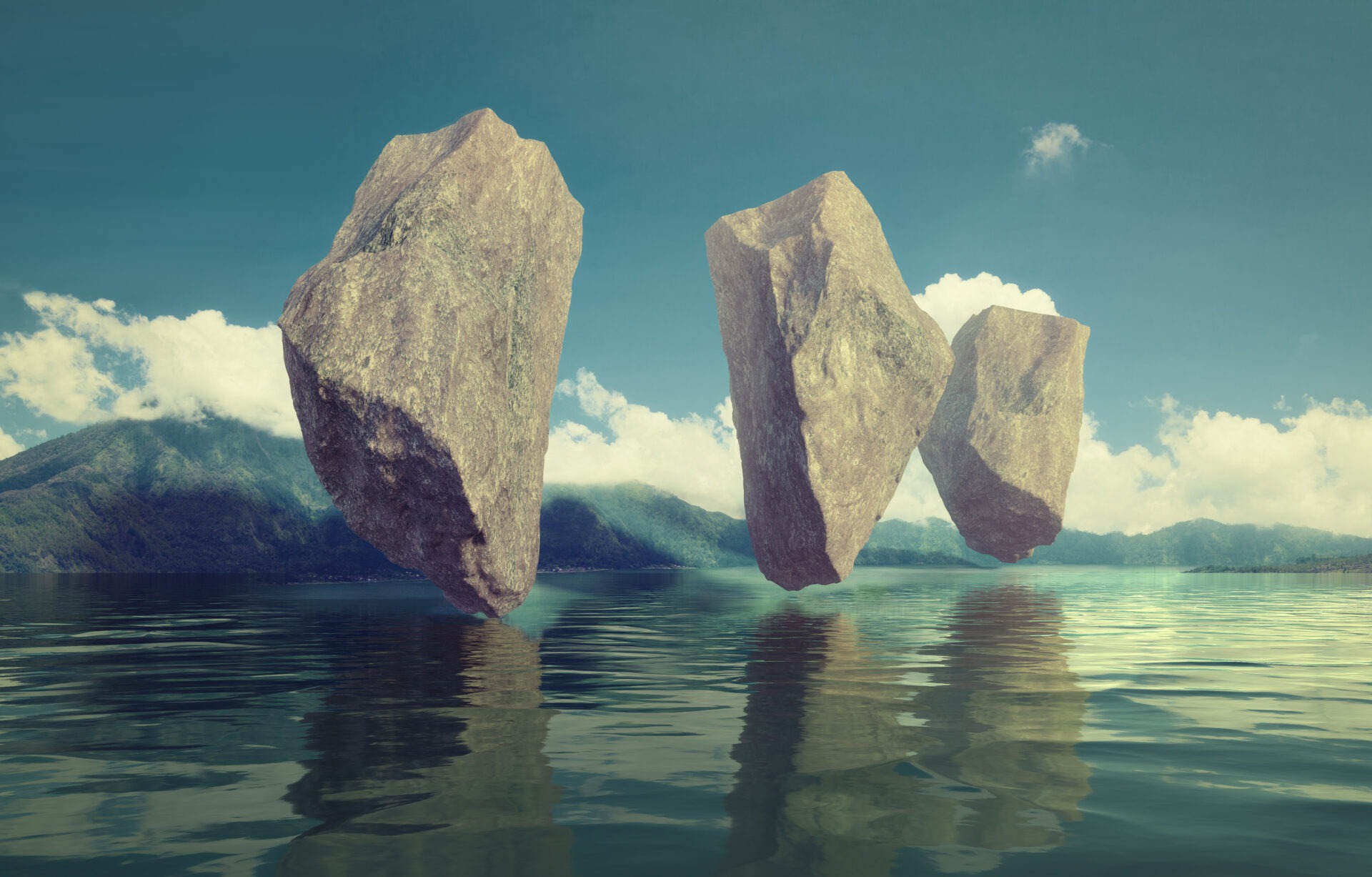
The rise of surrealism from a niche artistic style to a mainstream design language can be traced to multiple cultural and technological shifts coming together.
Perhaps the biggest catalyst has been the rise of gen AI, as it has lowered the technical barrier to complex image manipulation. As a result, more creatives than ever before are experimenting with impossible visual concepts and high-concept storytelling.
Surrealism performs extremely well in the attention economy driven by social media. It stands out in crowded feeds of hyper-polished photography as perfection has become invisible. Visuals that create friction, capture attention. This ability to interrupt scrolling behaviour has obvious appeal for brands.
As audiences navigate economic uncertainty, rapid technological change and constant information overload, dreamlike imagery offers something many people are actively seeking: a different perspective. Surreal visuals offer a temporary escape from the ordinary by presenting worlds, where normal rules no longer apply.
Many of today's most successful surreal designs combine dreamlike concepts with elements of nostalgia, creating a powerful commercial strategy for brands as our culture craves it. Familiar references provide an emotional anchor that helps audiences engage with otherwise unconventional imagery.
Pure surrealism can sometimes feel unsettling. Pairing it with nostalgic colour palettes, vintage aesthetics or retro-futuristic influences creates a sense of comfort that balances the unfamiliar - making it a booming trend that is going to stay with us beyond 2026.
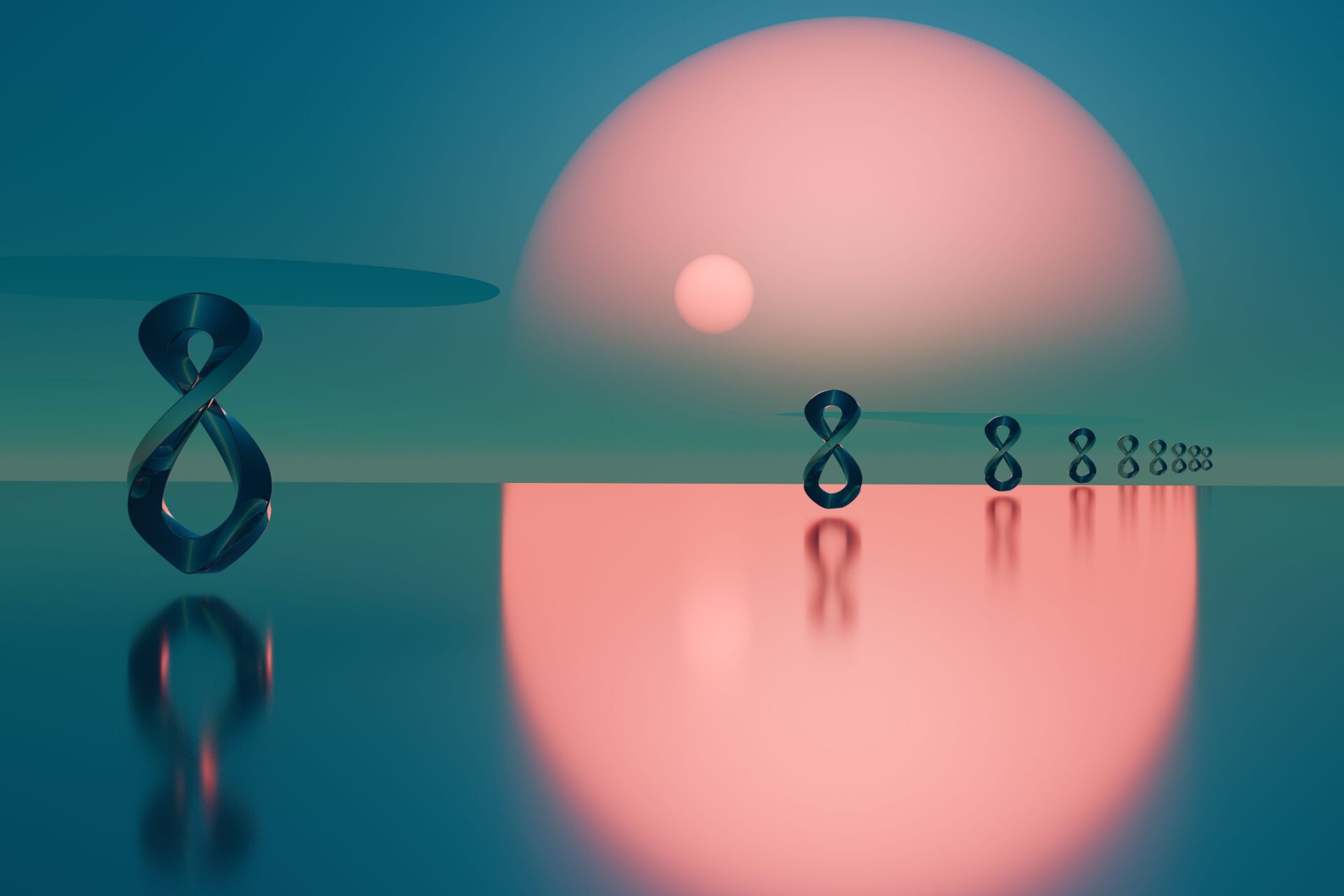
Much of surrealism's recent growth can be traced back to AI, yet AI itself reveals the limits of automated creativity.
Large language models and image generators excel at identifying patterns and recombining them into safe outputs. What they are far less capable of doing, is genuinely stepping outside those patterns.
This limitation is rooted in the way AI systems are trained, because models are designed to predict the most likely next word, image element or sequence - they naturally favour existing patterns rather than breaking away from them. In other words, they are optimised to stay inside the box.
People, by contrast, intuitively create through curiosity, experimentation and quite often mistakes. All the innovative ideas emerge from exploration, unpredictable conceptual leaps and deliberate rule-breaking, never from following the same patterns.
This is why the future of creative work is unlikely to be a choice between human designers and AI systems.
AI can accelerate ideation, generate visual references, test variations and help bring concepts to life. It can function as a creative tool, but what it cannot reliably do is decide which ideas are worth pursuing in the first place. The key to success is to channel AI for creativity rather than use it as a directing force. It can be a storytelling instrument, a way to translate inner narratives into images because it opens the space between imagination and image like a conversation partner, extending a way of thinking.
For that reason, the most successful AI-assisted design projects often involve significant human input at the earliest stages of ideation, followed by careful refinement throughout the creative process. The technology may generate possibilities, but people still need to provide manual input and clever judgement for a deeper meaning and credibility.
The strongest surreal design concepts hint at symbolic narrative, feeling like a dream with a message, not just a glitch in reality. Without that layer of human interpretation, surrealism risks becoming little more than visual noise.
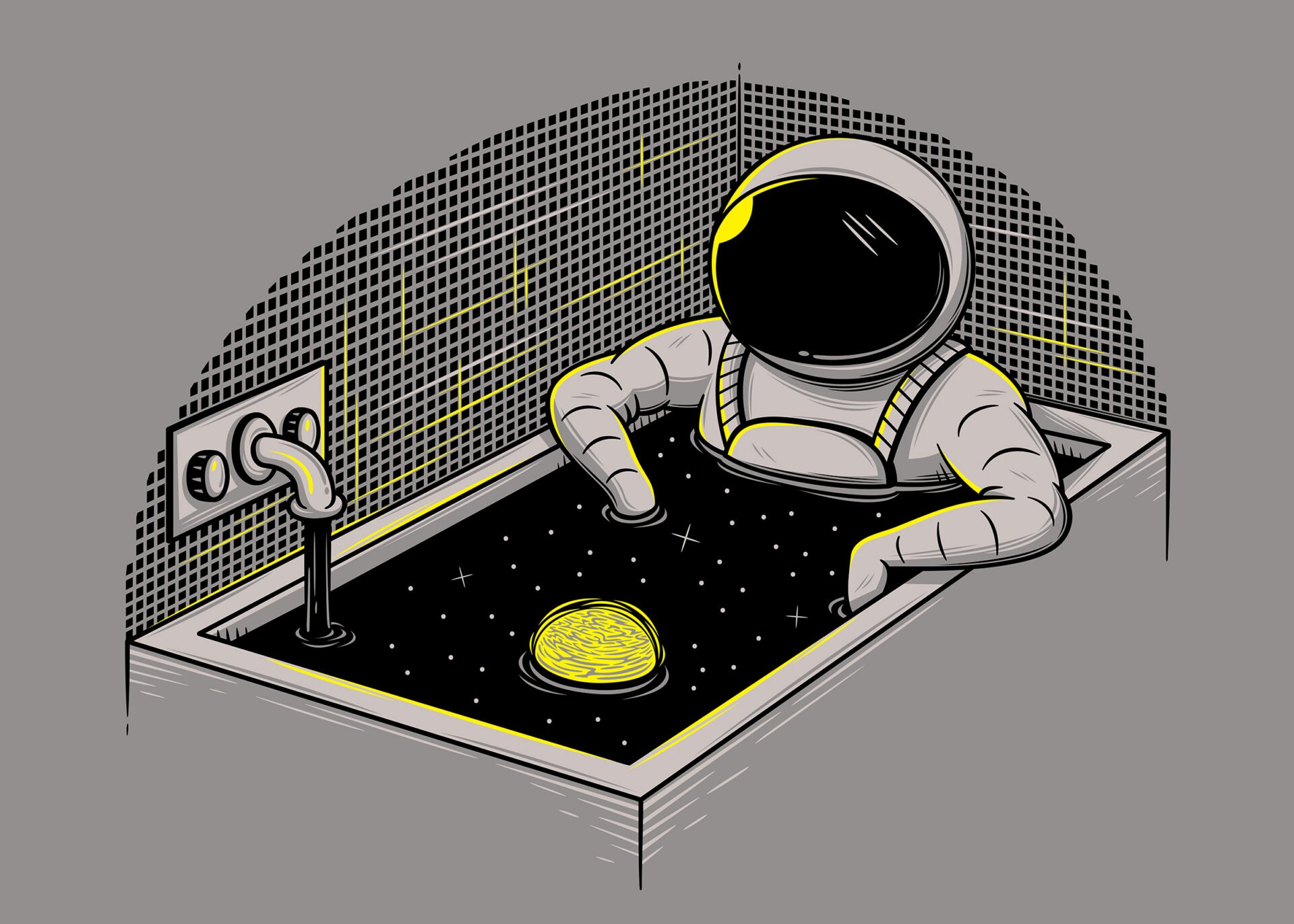
The popularity of surrealism shows no signs of slowing down, but the long-term success of this movement won’t depend solely on how sophisticated AI becomes, but whether creatives continue to use these tools to tell meaningful stories that make us feel something, rather than simply generate images.
Some directions to push beyond the AI boundaries would be to create hybrid systems combining structured reasoning with pattern-based learning, injective mechanisms for exploration and novelty-seeking as well as finding better ways to evaluate ‘creativity’ beyond accuracy and coherence.
And while AI can generate endless possibilities, imagination remains distinctly human, which is why the future of creativity still belongs to those willing to question the obvious and imagine something that doesn't yet exist.
Take a look at our approach to design or contact us to discuss how we can support your design needs.
Head Office
Moore House
13 Black Lion Street
Brighton
United Kingdom
BN1 1ND
London Office
24/25 The Shard
32 London Bridge Street
London
United Kingdom
SE1 9SG
Man Bites Dog Ltd. is a company registered in England and Wales with company number 05156769. Registered office: Moore House, 13 Black Lion St, Brighton and Hove, Brighton BN1 1ND. VAT No: GB854451518.