
For decades, trust has been one of the defining goals of B2B marketing. Trusted brands are more likely to be remembered, shortlisted and recommended. Trust reduces uncertainty and helps organisations build long-term relationships.
But something significant has changed. As B2B buying decisions have become larger, more complex and more strategically important, trust alone no longer provides senior decision-makers with the confidence they need to commit. In today's high-stakes environment, buyers are looking for more than reassurance - they are looking for certainty.
They want evidence that a supplier understands what is changing, what risks lie ahead and how to help them succeed in an increasingly unpredictable world. That is why the most successful B2B brands are moving beyond trust and focusing on a new objective: decision-grade confidence.
Trust remains a fundamental part of any successful business relationship - no buyer wants to work with an organisation they do not trust. Trust helps answer questions such as:
But trust only gets buyers so far. In many high-stakes decisions, buyers already trust multiple suppliers, so the challenge is choosing between them.

The answer lies in the changing nature of B2B buying. What organisations are buying today is increasingly transformational rather than transactional. Major purchases now involve larger investments, greater risk and increased executive scrutiny.
As a result, buyers need far more evidence before they are willing to move forward. A supplier can be trusted and still fail to provide enough confidence to support a significant decision.
Consider the questions senior buyers are increasingly asking:
Trust alone cannot answer those questions.
This is one of the most important questions facing modern B2B marketers. Many organisations assume that if buyers trust them, decisions will naturally follow. In reality, trusted suppliers lose opportunities every day. Not because buyers dislike them, and not necessarily because competitors are stronger, but because buyers cannot confidently commit to action. Often, the biggest competitor is not another supplier - it is indecision.
Senior decision-makers increasingly want partners that help them think better, see further and act with greater certainty. They are looking for organisations that demonstrate a visible intelligence advantage. This means making expertise impossible to ignore. Buyers want suppliers who can provide:
One of the most useful ways to understand the shift is to recognise that trust and confidence perform different jobs.
Trust remains part of the equation, but confidence is what ultimately moves decisions forward.
Decision-grade confidence develops when buyers encounter consistent evidence that an organisation understands their world and can help them navigate it successfully. It is created when brands make their intelligence advantage visible. The strongest confidence signals typically include:
These assets help buyers understand not only what a company does, but how it thinks. And in high-stakes B2B, how a company thinks is often more important than what it sells.
For many organisations, it requires a fundamental shift. Historically, marketing has often been focused on things like awareness, reach, familiarity, reputation. Those objectives still matter but increasingly they are only the starting point. The next challenge is helping buyers build the confidence required to justify a major decision.
This means creating marketing that educates rather than promotes, clarifies rather than complicates, demonstrates expertise rather than claims it, helps customers navigate uncertainty, and supports buying decisions.
The goal is to be trusted enough to be considered and intelligent enough to be chosen.
Intelligent Brands understand that modern buying decisions are confidence challenges. Rather than relying solely on trust, they make their expertise, insight, data and thinking visible through brand, marketing and thought leadership. As a result, they help buyers:
Trust will always matter, but the brands that dominate the next generation of B2B growth will be those that recognise trust as the foundation. As buying decisions become more strategic, more scrutinised and more complex, buyers will increasingly look for partners that help them navigate uncertainty with confidence.
Those organisations will become indispensable, and that is what separates an Intelligent Brand from a merely familiar one.
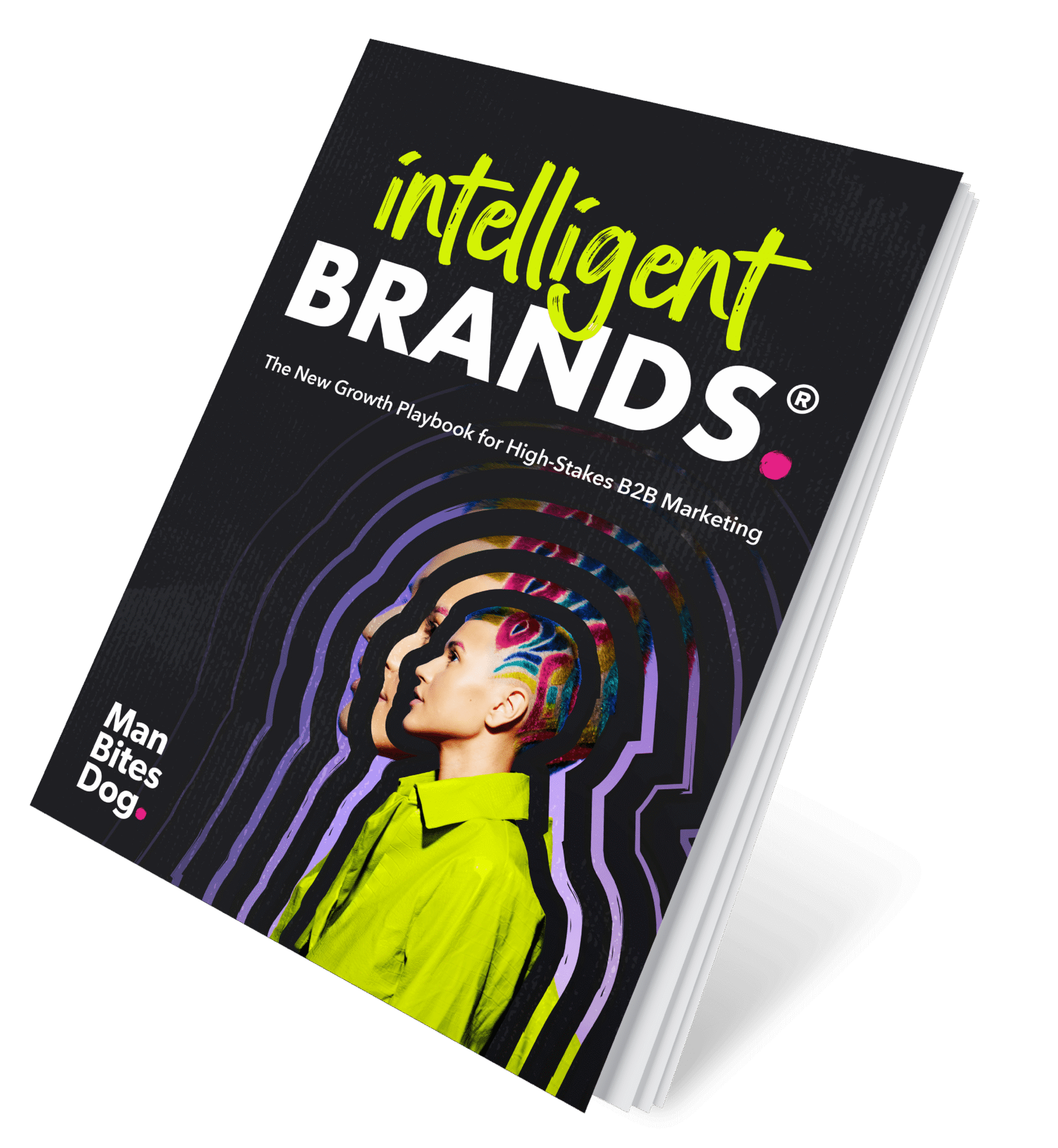
Download the Intelligent Brands report to explore the data in more detail and get a practical framework to inspire decision-grade confidence in your customers.
Or get in touch with our team of B2B experts to discuss how we can help your organisation accelerate growth.
Yes. Trust remains essential for credibility, reputation and relationship-building. However, in high-stakes buying situations, trust alone is often insufficient to drive action.
Because many buying decisions stall due to uncertainty, risk and lack of internal confidence rather than a lack of trust in suppliers.
Trust establishes credibility. Decision-grade confidence provides the conviction required to commit to a significant decision.
Visible expertise, expert insight, thought leadership, original research, proprietary data and strategic foresight all help buyers build confidence.
By making their organisation's intelligence advantage visible through brand, thought leadership, research, expert voices and evidence-led marketing.
Head Office
Moore House
13 Black Lion Street
Brighton
United Kingdom
BN1 1ND
London Office
24/25 The Shard
32 London Bridge Street
London
United Kingdom
SE1 9SG

Man Bites Dog Ltd. is a company registered in England and Wales with company number 05156769. Registered office: Moore House, 13 Black Lion St, Brighton and Hove, Brighton BN1 1ND. VAT No: GB854451518.