In 2026, three letters dominate every marketing and communications conversation: G, E and O. GEO – or generative engine optimisation – is the practice of optimising your content so that it is most likely to show up in the answers generated by AI. As the younger and less mature cousin of SEO, the rules and principles underlying GEO are still being worked out and changing all the time. But for B2B brands with long and complex buying cycles, it’s fast becoming the issue at the top of every marketer’s to do list.
As part of our latest Don't Overengineer It! series, Man Bites Dog brought together marketing leaders from across the engineering, energy and infrastructure sectors to explore how AI is reshaping the way buyers find and evaluate organisations. Leading the discussion was Dan Matthews, Man Bites Dog's Head of Editorial, with a talk from Simon Schnieders, founder of Blue Array and one of the UK's leading voices on GEO and search.
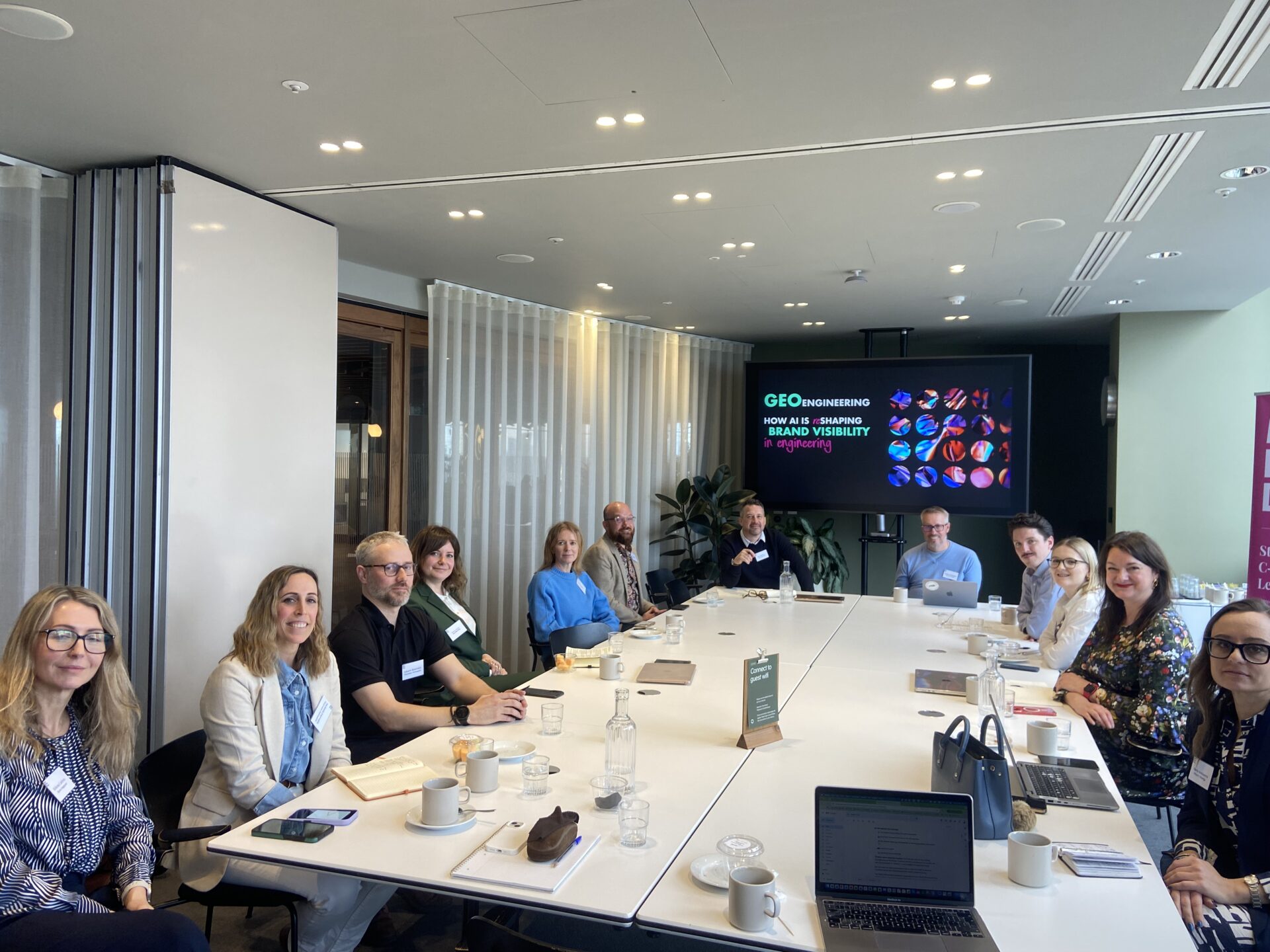
Here are a few key takeaways from the talk:
Traditional SEO logic breaks down with generative AI. The same prompt can return a completely different answer minutes later, making keyword tracking meaningless. What matters now is whether models associate your organisation with the right categories – for example offshore wind, grid resilience, advanced robotics or public infrastructure delivery – and how prominently. For complex firms operating across multiple sectors, identifying which categories to own and consistently reinforcing them is the challenge and the opportunity.
Large language models draw heavily on user-generated content - LinkedIn, Glassdoor, Reddit, industry forums - because it contains the lived human experience that they can't generate themselves. Brands with limited public discussion are at a disadvantage, even if their technical capability is strong. For firms in the engineering sector, where this kind of visibility can feel uncomfortable, the message is simple: quiet brands are invisible brands.
Individuals matter to models. Engineers, directors and specialists who are visible through authored content, interviews and cited commentary are more likely to surface in AI outputs than anonymous organisations. This is particularly important in sectors selling into government, large enterprises or any complex business with sophisticated buyers. We are now entering the new age of experts.
Agentic AI is already being embedded in browsers. Chrome (with its 65% market share) already has agentic features built in. As AI agents increasingly act on behalf of users, the need to visit a website in its traditional sense diminishes. For engineering and infrastructure firms, this means websites are evolving into structured capability feeds that machines interact with directly, rather than marketing destinations designed for humans. An emerging standard entitled WebMCP — backed by Google, OpenAI and Microsoft — will allow AI agents to navigate your site autonomously. Early adoption could be a genuine competitive advantage: if an agent can reliably interact with your site and not your competitor's, that's your shortlist.
Changes to your owned and earned content may not be reflected in AI outputs for six to twelve months. One-off content bursts are unlikely to move the needle. What builds recognition inside the models is sustained, long-term reinforcement of core themes and expertise. Long-term multiyear strategic campaigns are the name of the GEO game, not one-off tactical bursts.
AI systems can only recombine what already exists. Low-information-gain content is actively filtered out, and both search engines and AI models are getting better at spotting it. We are entering the new age of experts, where thought leadership – backed by original ideas, proprietary data and genuine points of view – will become the sharpest point of differentiation a brand can have. These are the signals that content is real, credible and genuinely useful.
The rise of GEO represents a huge opportunity for engineering, energy and infrastructure firms: the sector has deep expertise, real stories to tell and technical experts to tell them. The brands that commit to saying something specific, informed and evidenced will be the organisations that AI models - and the buyers using them - come to regard as authoritative leaders in their field.
If you want to discuss any of these themes or think creatively about how your own marketing needs to respond to the rise of GEO, please get in touch, we'd love to help.
Head Office
Moore House
13 Black Lion Street
Brighton
United Kingdom
BN1 1ND
London Office
24/25 The Shard
32 London Bridge Street
London
United Kingdom
SE1 9SG

Man Bites Dog Ltd. is a company registered in England and Wales with company number 05156769. Registered office: Moore House, 13 Black Lion St, Brighton and Hove, Brighton BN1 1ND. VAT No: GB854451518.