
Intelligent Brands: The New Growth Playbook for High-Stakes B2B Marketing
Unlock your Intelligence Advantage
We’ve all been there, the family camping trip.
You’ve parked up, wind howling, rain pouring and, while everyone else huddles in the Volvo with the radio and heating on, you battle the elements and the instruction manual to get the tent up.
It’s a nightmare: poles everywhere, top sheet flapping like an inflatable waving man at a car showroom, canvas half a field away. Three minutes later, in a rupture of Millets components, you surrender and stomp back to the car.
When your family greets you with wide-eyed confusion, your only recourse is to mutter, bitterly, ‘crap tent’.
Although truthfully this has never happened to me, nor probably most of you, ‘craptent’ most certainly has. With the onset of AI and seemingly proportionate drop off in human effort and imagination, the situation is getting worse.
Apologies, I’m ahead of myself. First, a definition: craptent is content minus thought. At its worst it’s a prompt for a 700-word blog on something nice like ‘cohesive workforces’ or ‘innovation’ or ‘inspiring leadership’.
It almost always starts with ‘In today’s modern/dynamic/fast-paced business landscape’ and pretty much always ends there, because no one EVER reads any further.
Because of this and things like it, the word ‘content’ has become self-fulfilling: it is generic, shapeless gloop that’s steadily filling up the internet and threatens to drown us all. Google doesn’t even look at it – that’s how bad it’s got.
Better, surely, to write editorial, or opinion, insight, something inspiring, investigative or full of wit that you can cut your finger on.
Dare I say, something new.
Because that’s what’s so often missing with craptent. It’s not just directionless, inane, facile and jejune, it’s always a repeat. It’s a bit of what ‘the author’ read here and there, mended, blended and extended by the generative artificial intelligence of their choice.
GenAI can’t help you out of the craptent quagmire because – while it is undoubtedly a fantastically clever leap forward (more on that in a blog coming soon) – all it can give you in this context is the neatly collected thoughts of people who went before.
The only way out of all this fraudulent copycatting is to write your own blooming content, giving it requisite time and thought. Make a cup of tea, close the door, turn off your phone, order your thoughts, consider the angles…dream a little…and perhaps – god forbid – do some research.
No, not on ChatGPT!! Haven’t you been listening?
By doing your own investigating, you’ll uncover little jewels that sparkle brighter than anything a machine could polish up. Plus, you won’t have to worry that your AI just imagined the whole thing – and that the person it quotes is not, in fact, an under-secretary at the UN but an amalgamation, or tissue of synthetic lies.

Add a dash of wisdom, a neat idea or a sprinkling of facts no one knew before and you have the basis for something, erm, what’s the word now, oh yes: interesting.
We are lucky at Man Bites Dog, because being unique and interesting is in our blueprint. When we founded 21 years ago, our CEO Claire chose our name because it describes the essence of a good story: when everyone else is writing about dogs biting people, we look (metaphorically, of course) for evidence of people biting dogs.
We’re committed to the cause. We stand for originality, inspiration, thoughtfulness and good old-fashioned effort. We love sophisticated data and the simple human stories that emanate from it – and we love to create, not generate. If there’s a moral in here somewhere, I think it’s this: GenAI has made us quick and clever (at least by proxy), but let’s not forget to make sure we’re also good.
Dan Matthews is head of editorial at Man Bites Dog.
Talk to Dan about custom publishing, branded magazines, websites, dynamic digital and editorial products to help your business become a thought maker in its market.
If you'd like to speak to us about anything else, please get in touch, we'd love to help.
‘To get the most out of artificial intelligence, marketing chiefs need to fall in love with the problem, not the solution.’ That’s the most important piece of advice shared at Man Bites Dog’s recent Food for Thought Leadership dinner in London.
It’s important to first define the challenges you face and then – only if appropriate – use AI to solve them. The alternative is chasing tech for its own sake, which is expensive and, whisper it, a fool’s errand.
A lot of the latter is happening right now within organisations, a trend Ed Greig, Chief Disruptor at Deloitte Digital and guest speaker at the event, described as ‘sprinting in the fog’.
Frenzied activity like this is symptomatic of a technology hype-cycle: businesses rushing to adopt but not really understanding why.
In truth, we are probably yet to enter the period in which AI becomes truly useful. With every major technological era, from electricity to the internet, the best, most ground-breaking ideas tend to arrive only when the noise fades.
A brilliant example is the humble QR code. Today, we know exactly what to do with them and they have a limited yet practical use. Fifteen years ago, it was a different story: enormous hype, but no agreed benefits whatsoever.
A relevant example for marketing leaders today is something we at Man Bites Dog like to call “doughnut content” – glossy but fundamentally empty of thought.
AI is flooding the market with content that looks impressive but has no intellectual nutrition, fuelling writing that reads fine but with an eerie, liminal aftertaste. There’s no authenticity, originality or value.
It’s similar to ultra-processed food, which is quick and looks like something you could consume, but you don’t get much out of it.
And just as with ultra-processed food, a backlash is coming for doughnut content.
Audiences, especially in B2B, are starting to crave substance again: depth, expertise, credibility, personality. When the novelty of AI-generated fluff wears off, authentic, insightful content will stand out even more.
None of this is to say that AI is having a weak impact. On the contrary, it’s already changing behaviour.
For example, AI summaries in search results are shifting how people access and interact with information, which is a huge change for the internet as we know it. As a result, marketing professionals now need to get better at delivering content that answers real problems with authority.
More broadly, AI is great for organising, refining and categorising. Building efficiency is the name of the game, as is reducing lag or doing menial digital tasks faster than any human.
But it has its limits. It tends to make its biggest positive difference when things are improved and augmented, but, in general, not replaced. It can make a good business even better, but it won’t make a bad business good.
So leadership matters: if mundane jobs are automated, the C-suite must decide how to redeploy people effectively to protect long-term talent pipelines.
With all this considered, AI has broad appeal and transformative potential. Once CMOs navigate the use-case cul-de-sacs and remove the tinsel, its underlying power is massive.
Another important reminder from the discussion: you’re not behind on AI. Hype has distorted expectations, convincing us that we should somehow be further ahead innovation-wise and getting more out of it.
This is the “illusion of progress,” which cloaks just how unfinished most projects are across the board, even in large, well-funded outfits.
The futurist Roy Amara’s adage from 1978 is as true now as it was then: ‘We tend to overestimate the effect of a technology in the short run and underestimate the effect in the long run’.
In other words, the hype about the next 12 months is likely exaggerated, but considerations for the next decade are probably underdone.
If you’re just starting to find your way with AI, then don’t worry, you’re in a strong position. The best advice from the evening: think big, start small, test often and, when it works, scale fast.
Instead of rushing ahead, businesses should work on their rhythm: test, learn, iterate and create feedback loops to ensure everything remains focused on your goals.
But even before you do any of that, consider behaviour. Is your department and the broader business culturally attuned to digital transformation? Because all the tools in the world won’t start a revolution unless your teams are on the same page.
Note too that marketing will always be the closest function to the customer, so its core purpose isn’t going away. What will change is how tightly it integrates with product and service operations.
Rather than a silo that just “does comms,” marketing should become the feedback engine, or an interface between customer insight and product evolution. It’s about shortening the distance between intent and execution.
Even in heavily regulated industries, there’s a benefit to thinking in these terms now. CMOs may not be able to implement everything immediately because of regulatory constraints, but they can start building the vision and laying foundations for the future.
Clear direction enables creative solutions even within tight legal frameworks, like in the case of sandboxes for financial products.
In summary, the future belongs to marketing leaders who build trust, communicate clearly and guide people through uncertainty rather than sprint blindfolded into it.
With a methodical, sensible and frenzy-free approach, you can lay the foundations for long-term success while swerving AI’s many pitfalls.
If you are looking for a bit more support on all this, please get in touch, we love a challenge, and we'd love to help.
In a world where tech buying cycles are longer and product features alone no longer cut through, insight-led thought leadership has become a critical tool for influence and growth.
At a recent techUK webinar - Supercharging Sales with B2B Tech Thought Leadership - Man Bites Dog and BT shared a powerful new playbook for turning thought leadership into commercial impact. The takeaway? Bold thinking, underpinned by bespoke data, is the new currency of influence in tech marketing.
Claire Mason, CEO & Founder of Man Bites Dog, and Fiona Buckley, Technology Divisional Director, shared findings from our transatlantic Thought Makers research, revealing how senior decision-makers engage with thought leadership and how it drives their buying decisions.
These findings prove that thought leadership is far more than just brand building. It’s the spark that ignites boardroom conversations and shapes vendor shortlists. One-off white papers and isolated blog posts won’t break through at the C-Suite level. To win real influence and drive commercial impact, tech brands need a sustained stream of provocative, data-driven insight that challenges assumptions, earns a seat at the decision-making table and directly fuels revenue growth.
The webinar spotlighted BT’s Cyber Agile Organisation campaign - developed in partnership with Man Bites Dog - as a powerful example of thought leadership driving strategic repositioning and measurable growth.
The campaign was built around a bold hypothesis: that cyber-agile organisations outperform their peers. Research proved it true, revealing that businesses with strong cyber agility achieved 20% higher growth rates over three years. By reframing cybersecurity as a growth enabler, not just risk mitigation, BT elevated the conversation to the boardroom, repositioning security as a competitive differentiator.
Turning thought leadership into measurable growth requires more than great content, it takes close collaboration with sales too.
Hassiena Albohaithi, BT’s Global Head of Field Marketing, explained:“As part of this campaign we wanted to cement and showcase our expertise in security, and thought leadership gave us the platform to do that. This was a unique opportunity to work side-by-side with sales to drive demand, accelerate pipeline and position BT as an expert voice in this space.”
Sales engagement was amplified through a benchmarking tool and strategic influencer partnerships, opening doors to new conversations. And LinkedIn Live sessions proved successful in reaching senior buyers at scale. The campaign also created momentum internally, aligning wider teams behind a unified value proposition and accelerating go-to-market impact.
Whether you're a scaling tech SME or a global enterprise, the mandate is the same: anchor your go-to-market strategy in content that delivers new insight, credibility and commercial impact.
At Man Bites Dog, we work with intelligent brands to create thought leadership that commands C-Suite attention and accelerates growth. If you want to learn how to turn your expertise into influence, and influence into impact, download our latest Thought Makers report, or get in touch to find out how your brand can become the next Thought Maker in your market.
Unlock your Intelligence Advantage
Find out how you can use thought leadership to supercharge brand and sales.
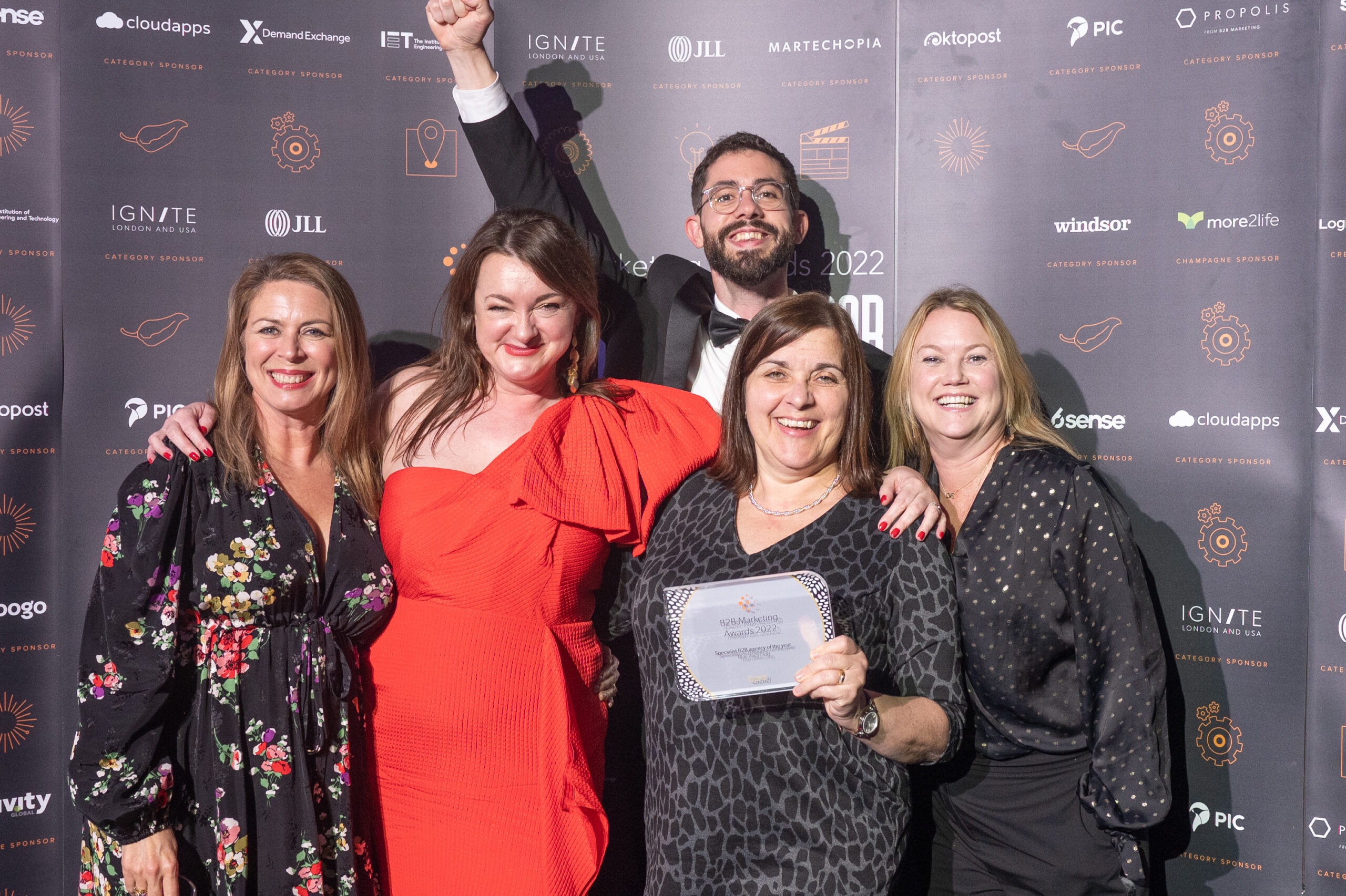
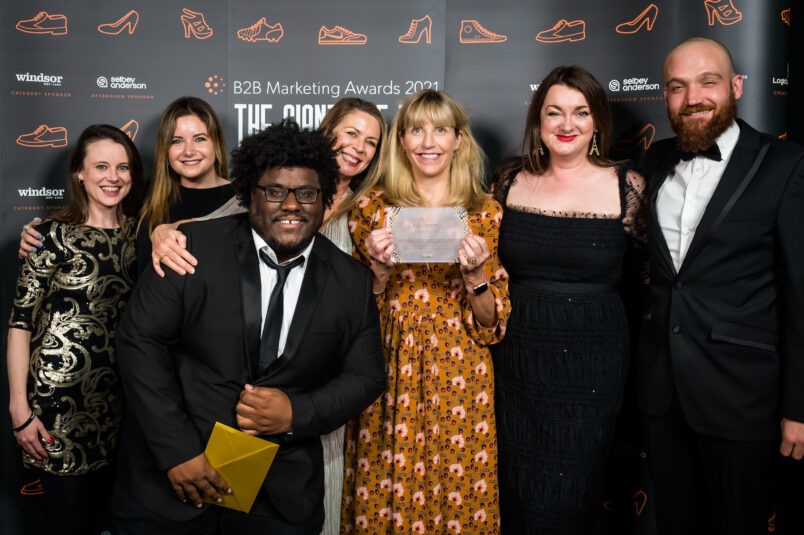
Man Bites Dog has been named Specialist Consultancy of the year in the B2B Marketing Awards.
Our award-winning Zeronomics campaign for Standard Chartered is a cornerstone example of the storytelling, positioning and strategic work we do at Man Bites Dog.

Man Bites Dog recently partnered with Women in Journalism to conduct a major new study on gender inequality in UK journalism and media.

For some years now, we have been campaigning to close The Gender Say Gap, a term we coined to highlight the invisibility of women and diverse leaders as expert authorities in business and public life.








Head Office
Moore House
13 Black Lion Street
Brighton
United Kingdom
BN1 1ND
London Office
24/25 The Shard
32 London Bridge Street
London
United Kingdom
SE1 9SG

+44 (0) 1273 716 820
[email protected]
Man Bites Dog Ltd. is a company registered in England and Wales with company number 05156769. Registered office: Moore House, 13 Black Lion St, Brighton and Hove, Brighton BN1 1ND. VAT No: GB854451518.