
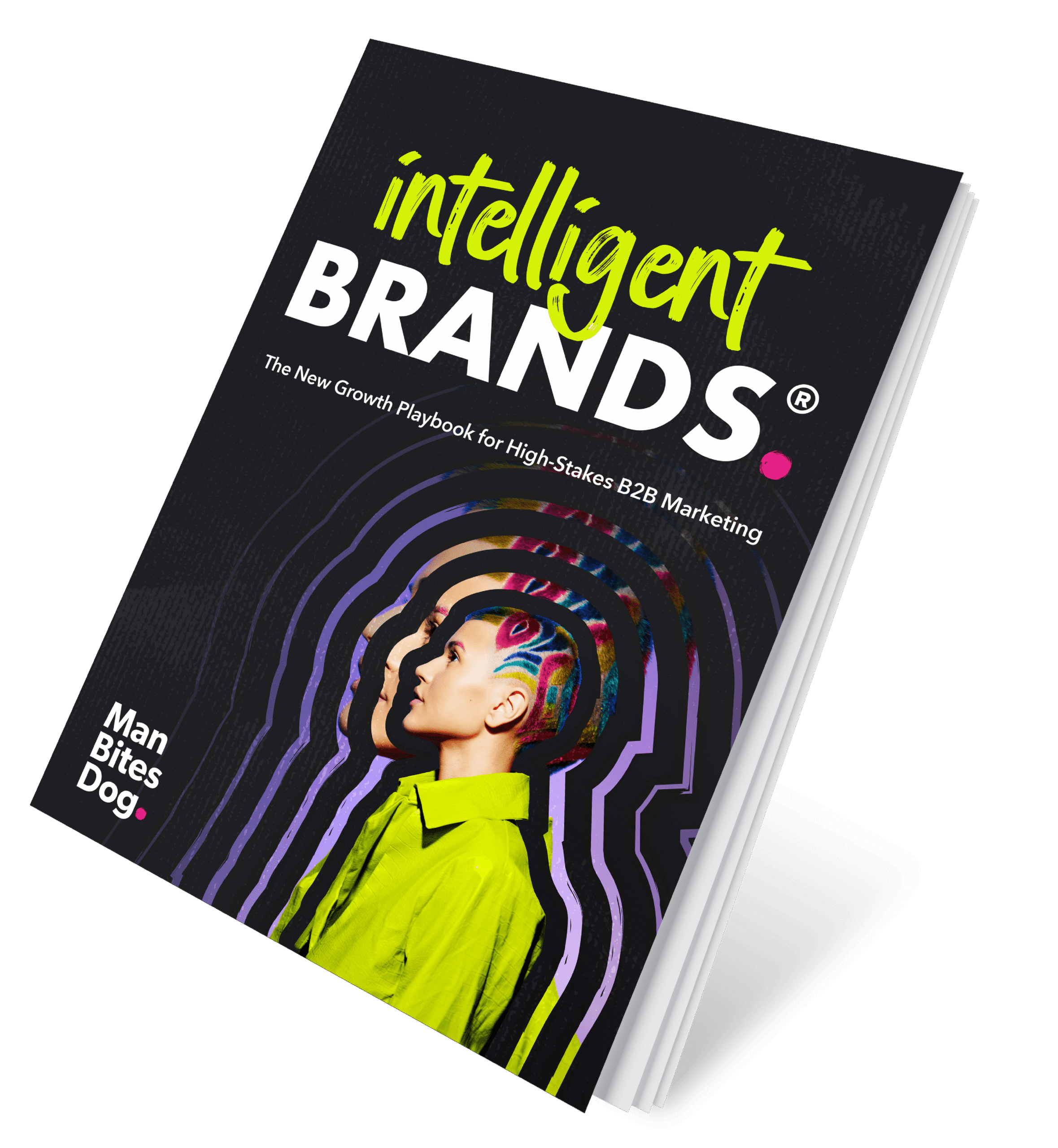
In 2026, three letters dominate every marketing and communications conversation: G, E and O. GEO – or generative engine optimisation – is the practice of optimising your content so that it is most likely to show up in the answers generated by AI. As the younger and less mature cousin of SEO, the rules and principles underlying GEO are still being worked out and changing all the time. But for B2B brands with long and complex buying cycles, it’s fast becoming the issue at the top of every marketer’s to do list.
As part of our latest Don't Overengineer It! series, Man Bites Dog brought together marketing leaders from across the engineering, energy and infrastructure sectors to explore how AI is reshaping the way buyers find and evaluate organisations. Leading the discussion was Dan Matthews, Man Bites Dog's Head of Editorial, with a talk from Simon Schnieders, founder of Blue Array and one of the UK's leading voices on GEO and search.
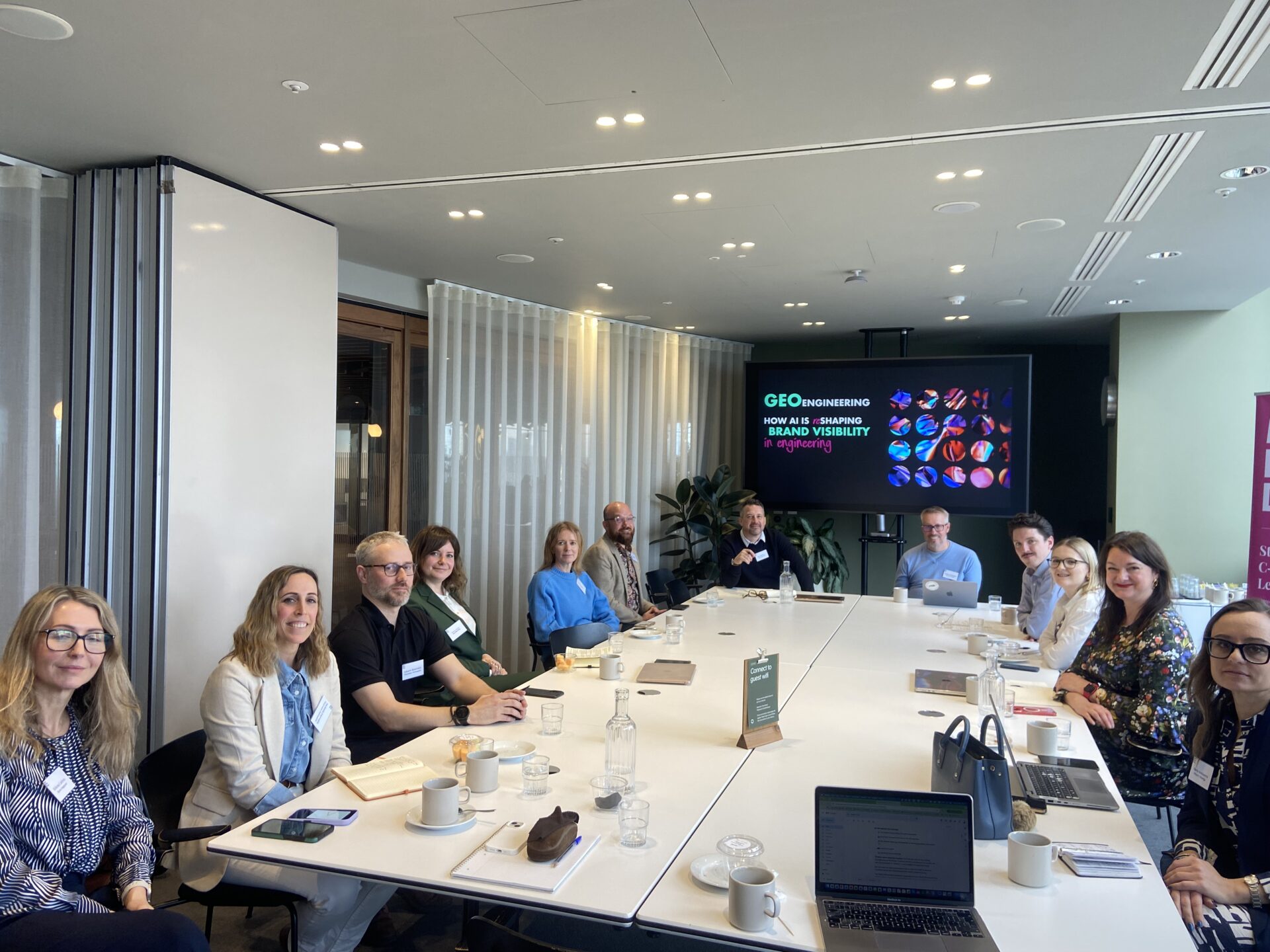
Here are a few key takeaways from the talk:
Traditional SEO logic breaks down with generative AI. The same prompt can return a completely different answer minutes later, making keyword tracking meaningless. What matters now is whether models associate your organisation with the right categories – for example offshore wind, grid resilience, advanced robotics or public infrastructure delivery – and how prominently. For complex firms operating across multiple sectors, identifying which categories to own and consistently reinforcing them is the challenge and the opportunity.
Large language models draw heavily on user-generated content - LinkedIn, Glassdoor, Reddit, industry forums - because it contains the lived human experience that they can't generate themselves. Brands with limited public discussion are at a disadvantage, even if their technical capability is strong. For firms in the engineering sector, where this kind of visibility can feel uncomfortable, the message is simple: quiet brands are invisible brands.
Individuals matter to models. Engineers, directors and specialists who are visible through authored content, interviews and cited commentary are more likely to surface in AI outputs than anonymous organisations. This is particularly important in sectors selling into government, large enterprises or any complex business with sophisticated buyers. We are now entering the new age of experts.
Agentic AI is already being embedded in browsers. Chrome (with its 65% market share) already has agentic features built in. As AI agents increasingly act on behalf of users, the need to visit a website in its traditional sense diminishes. For engineering and infrastructure firms, this means websites are evolving into structured capability feeds that machines interact with directly, rather than marketing destinations designed for humans. An emerging standard entitled WebMCP — backed by Google, OpenAI and Microsoft — will allow AI agents to navigate your site autonomously. Early adoption could be a genuine competitive advantage: if an agent can reliably interact with your site and not your competitor's, that's your shortlist.
Changes to your owned and earned content may not be reflected in AI outputs for six to twelve months. One-off content bursts are unlikely to move the needle. What builds recognition inside the models is sustained, long-term reinforcement of core themes and expertise. Long-term multiyear strategic campaigns are the name of the GEO game, not one-off tactical bursts.
AI systems can only recombine what already exists. Low-information-gain content is actively filtered out, and both search engines and AI models are getting better at spotting it. We are entering the new age of experts, where thought leadership – backed by original ideas, proprietary data and genuine points of view – will become the sharpest point of differentiation a brand can have. These are the signals that content is real, credible and genuinely useful.
The rise of GEO represents a huge opportunity for engineering, energy and infrastructure firms: the sector has deep expertise, real stories to tell and technical experts to tell them. The brands that commit to saying something specific, informed and evidenced will be the organisations that AI models - and the buyers using them - come to regard as authoritative leaders in their field.
If you want to discuss any of these themes or think creatively about how your own marketing needs to respond to the rise of GEO, please get in touch, we'd love to help.
Marketing financial products used to be a story of optimism and opportunity. ‘Growth storytelling’ was the name of the game. Globalisation was in full swing, Larry Fink was pioneering a more wholesome view of fiduciary duty, ESG was the acronym of the decade and making the world a better place was a complement to making it more opulent, not a trade-off.
Over the last year, that changed. From global trade frictions to developments in the Middle East, growth storytelling has fallen apart – not because it no longer makes sense, but because fewer people feel the optimism it was built on.
It has been replaced by something altogether more pessimistic: risk navigation.

As a theme, navigating risk is no less interesting than telling stories of growth, it’s just less fun. In fact, human beings are so psychologically programmed to avoid risk that the pain of losing is felt roughly twice as intensely as the joy of winning. Marketers have been leaning on FUD (fear uncertainty and doubt) tactics for generations for this very reason.
But when does risk marketing become opportunistic ambulance chasing, and when is it a reasonable response to long-term market conditions?
The answer lies in the seriousness with which we approach the challenges. Bad news demands deep deliberation and, latterly, big picture thinking. Marketers must engage with these themes because they shape corporate voices – and corporations largely define how the impacts of global events are felt. But for marketers to engage productively is more difficult.
Here are our three golden rules for storytelling in a heavy-hearted world:
If you want to discuss any of these themes or think creatively about how your own marketing needs to respond to the grave new world, please get in touch, we'd love to help.
In our webinar, ‘Return on Inclusion’, Man Bites Dog’s Divisional Director, Duncan Sparke, and Associate Director, Lauren Street were joined by financial services industry experts Farmida Bi CBE, from Norton Rose Fulbright, and Dominic Traynor, from BNY Mellon. The session covered how the financial services industry has the ability to not only advocate for major societal change, but to power it. For that reason, no-one else can quite match the potential of financial services marketers to catalyse progress.
To catch up on the webinar, watch the recording below.
The panel discussed the importance of creating impactful social purpose campaigns that cut through the noise. The problem with social impact campaigns, however, is that having a widespread real-world impact doesn’t happen overnight. Our webinar looked at the success factors in building a truly impactful social purpose marketing campaign, and unpacked one particular campaign that echoed around the world: BNY Mellon Investment Management’s The Pathway to Inclusive Investment – flipping the narrative from one of individual risk to one of global opportunity.
The webinar centered around the financial services sector and the pivotal role it can play in fostering positive social change. It touched on the importance of addressing the gender investment gap, and the intersectional complexities that play a role – from culture, and ethnicity, to socio-economic opportunity. The combination of these challenges and financial services’ ability to drive social evolution is a vital interplay.
The topics discussed during the webinar helped to illustrate the importance of the industry engaging with governments, and educational institutions, in an effort to tackle the societal pressures that sit at the cause of the investment gap dilemma.
An example of a purpose-led thought leadership campaign that successfully followed these principles is BNY Mellon Investment Management’s The Pathway to Inclusive Investment developed in partnership with Man Bites Dog. This social impact campaign is the largest study into global female financial inclusion. It found that the investment industry excludes 72% of women, and costs the global economy more than $3.22 trillion. It found that solving the inclusion crisis would open up an additional 1.86 trillion to fund climate and social investment aims.
During the Q&A session, several critical topics were addressed such as:
Organisations need to be committed to the long-term result with social impact campaigns. Having leadership buy-in and setting the parameters of success as real-world change beyond the immediate top-line advantage is crucial. Cutting through the noise, and delivering a campaign that is truly impactful, with data-driven insights is key in turning the dial on change.
To kickstart your brand's sustainable go-to-market strategy, reach out to us at [email protected] and explore our sustainability marketing solutions. For the latest updates on Man Bites Dog events and content, register for future event invitations here, or follow us on LinkedIn.
Find out how you can use thought leadership to supercharge brand and sales.
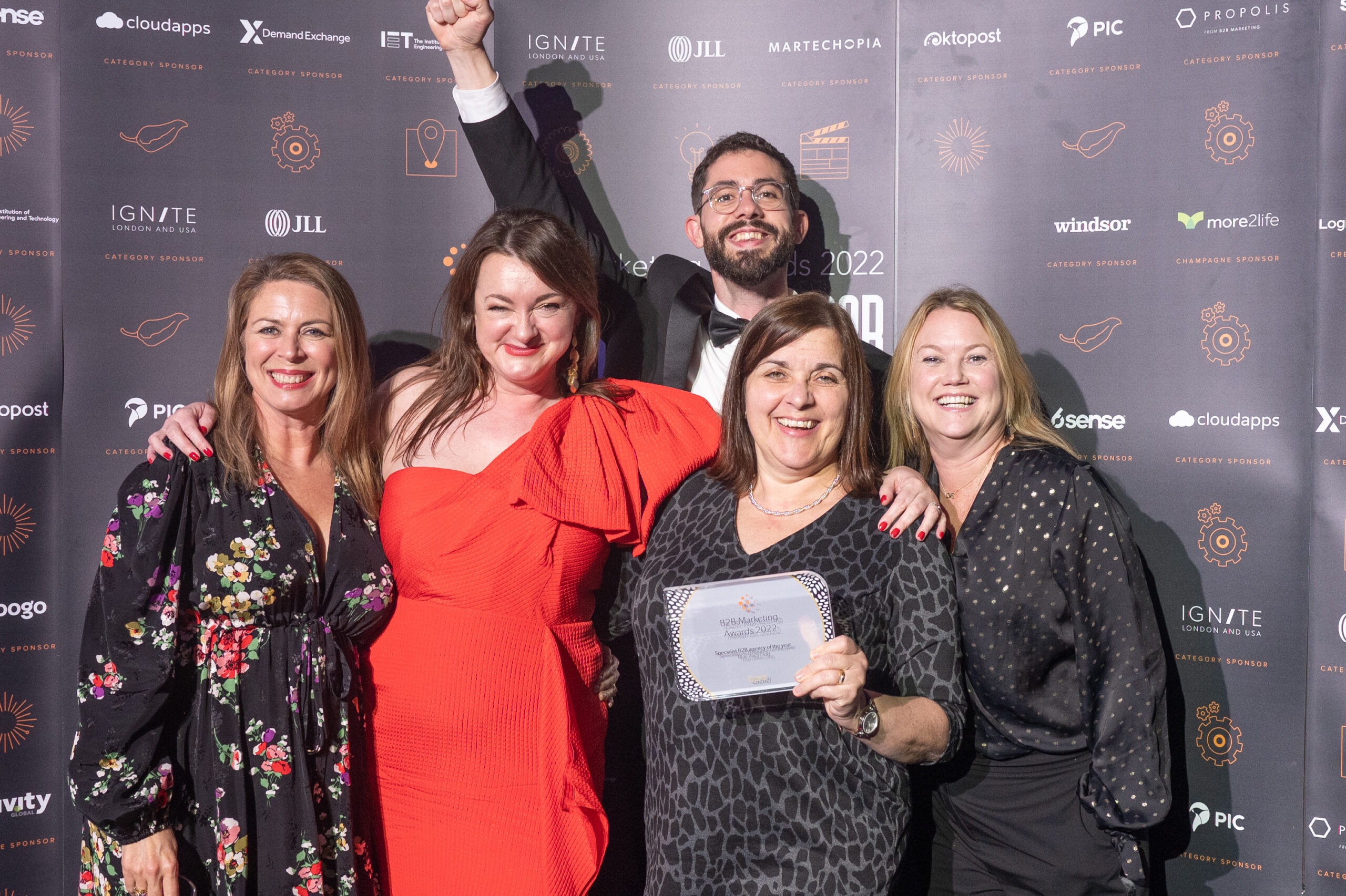
Man Bites Dog has been named Specialist Consultancy of the year in the B2B Marketing Awards.
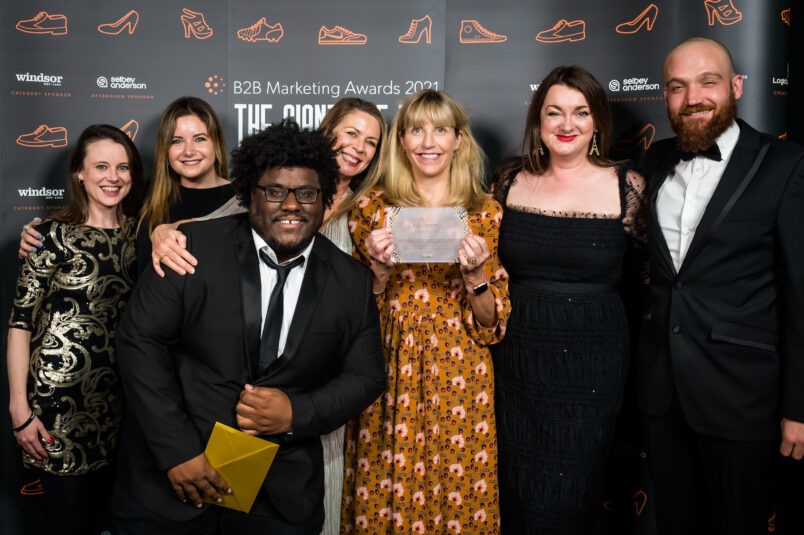
Our award-winning Zeronomics campaign for Standard Chartered is a cornerstone example of the storytelling, positioning and strategic work we do at Man Bites Dog.
Man Bites Dog recently partnered with Women in Journalism to conduct a major new study on gender inequality in UK journalism and media.

For some years now, we have been campaigning to close The Gender Say Gap, a term we coined to highlight the invisibility of women and diverse leaders as expert authorities in business and public life.






Head Office
Moore House
13 Black Lion Street
Brighton
United Kingdom
BN1 1ND
London Office
24/25 The Shard
32 London Bridge Street
London
United Kingdom
SE1 9SG

Man Bites Dog Ltd. is a company registered in England and Wales with company number 05156769. Registered office: Moore House, 13 Black Lion St, Brighton and Hove, Brighton BN1 1ND. VAT No: GB854451518.